Brew Dudes

Homebrewing Blog and Resource

The hobby of homebrewing beer

Homebrewed Love

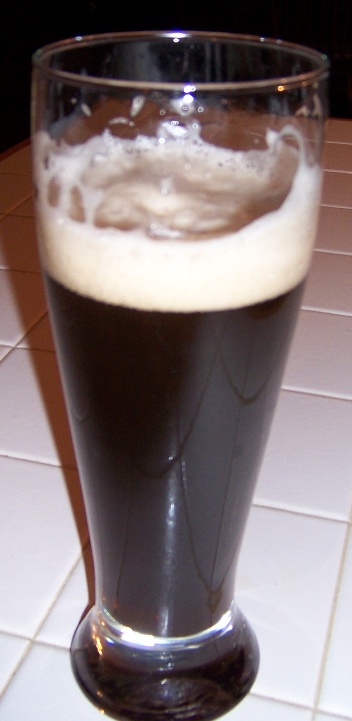
What’s a better expression of love than a tall glass of homebrewed beer?

Tall Glass of Homebrewed Beer

Seriously. You could spend all this money on other things that retailers want you to buy for this wacky holiday…or you could give something from the heart. You could give something that you put your own effort into making, and that has got to be worth a ton in this modern era.

So, give the gift of homebrewed love this Valentine’s Day. Your gift’s recipient will love you for it.*

*Just a gift suggestion from the Brew Dudes. Beer cannot make someone love you but it sure can help your cause. The Brew Dudes are not responsible for any breakups that occur after giving the gift of homebrewed love but dammit if they do break up with you, then it wasn’t meant to be and you are better off without them. So there.

Honey Wheat Ale Recipe

I think this recipe may be one of my summer brews this year. This honey wheat ale recipe is based on the American Wheat style, but a little darker in color. I’m trying to capture the honey in the color too.
This is an all grain recipe and as you will see, not fully baked.

Ingredients:

4.5 lbs. American 2-row Malt
4.5 lbs. Wheat Malt (hopefully American)
.75 lbs. Honey Malt
.25 lbs. American Caramel 20°L
.5 lbs. Honey
1.0 oz. Yakima Magnum Hops boiled 60 mins.
.5 oz. Glacier Hops boiled 15 mins
Yeast: White Labs WLP001 California Ale

Predicted Results:

Original Gravity: 1.050
Terminal Gravity: 1.011
Color: 8.18° SRM
Bitterness: 36.9 IBU
Alcohol (%volume): 5.1 %

Notes:

Using a clean American yeast strain to stay away from the clovey flavors of a Hefe strain.

Mash at 152° F for 60 minutes. I will probably pick up some local honey. Not sure when to add it tho. Probably at knockout. I may rack the beer to another vessel like a glass carboy and add the honey then. Not sure at this point. Depends how sweet I want to go. Probably not that sweet since I have the honey malt in there as well.

Not sure about the hop amounts either. I want to find a nice balance between the sweetness of the honey malt/honey and the bitterness of the hops. I had good results with Glacier hops last year, but I haven’t used Magnum hops before. I think it will need to be a game day decision.

If you would like to follow along with this brew session, check out these links:

Honey Wheat Ale Ingredients

Honey Wheat Ale Update

Honey Wheat Ale Plans

Honey Water Solution

Honey Wheat Ale Bottling Day

Barley Wine Style Profile

Barley wine is a strong ale that got its start in England in the 1800s.  The term ‘malt wine’ was used in the 18th century, but barley wine was used in the 19th century to market to common folk as an alternative to wine made with grapes.  They were made using the first, high gravity runnings of the brewer’s mash.  At the time, it was common to brew multiple beers (2 or 3)  from the same mash.

Nowadays, barley wines are brewed specifically.  These ales are complex and their flavor profile can change with conditioning time.

This style has some loose guidelines when it comes to color and, in some instances, the amount of alcohol in the brew.  I think that they should be strong and over 8% ABV.

With this looseness out of the way, a brewer can focus on the concrete guidelines around the flavor and the mouthfeel.

Barley wines should be malty.  It should be apparent in the aroma.   The flavor profile should have many layers to it.  It should hit upon all the malty descriptors from nutty to bready to caramel to roasty to toasty to molasses.    From what I have read, most of these flavors should come from just pale malt…but using long boiling times to caramelize the sugars  (of course specialty malts can help, especially for extract brewers).

The mouthfeel should have a lot of body.  It should have a chewy feel to it.

BCJP breaks this style into two types: English and American.   The American guideline allows for more hop flavors…naturally.

From what I read, this seems to be a tough beer to brew.  The starting gravities tend to be very high.   I think one would need to have their fermentation process down.  They would need to have experience making a starter, using yeast nutrients, and controlling their fermentation temps.  The use of a secondary fermenter may also be necessary.

I think the best part of the barley wine style is its changing flavor profile with age.  This style would be good to brew and age…and taste at different points in its lifespan.
Homebrewing In A Recession

I read a few news articles today discussing the upswing in homebrewing beer as a cost cutting measure in these troubled economic times.   I read it on the internet, so it must be true.

So I have a few thoughts/questions about this notion.

When I started homebrewing, the benefit of saving money wasn’t a big draw.  I saw it as an added bonus to the other benefits homebrewing brought me, but it was not a deciding factor to start.

Because saving money wasn’t a big reason for my homebrewing endeavors, I began to wonder if cost cutting was really leading more people to homebrewing or if it just made for a good article.

It seems like Coopers is seeing an increase in sales, but that is Austraila.

Are more people homebrewing?  Has the recession made for a boon for the homebrewing industry?

What say you?

Milk Stout Recipe

Not sure why I have Milk Stouts on the brain.   🙂

Here’s a simple milk stout recipe.  It is an all grain recipe:

Ingredients:

6.5 lbs. English 2-row Pale Malt
0.75 lbs. English Chocolate Malt
1 lbs. American Caramel 80°L Malt
1 lbs. Roasted Barley
1 lbs. Lactose
1 oz. Northern Brewer Pellets boiled 60 min.
0.50 oz. Fuggle Pellets boiled 15 min.
Yeast: White Labs WLP004 Irish Stout

Details:

6 gallon boil volume.  5 gallon batch size.

Mash at 154 degrees for 1 hour.

Ferment for 2 weeks at 66 degrees.

Bottle/Condition for 4 weeks.

Stats:

Original Gravity: 1.051
Terminal Gravity: 1.017
Color: 35° SRM
Bitterness: 32.5 IBU
Alcohol (%volume): 4.5 %

Page 272 of 322

Powered by WordPress & Theme by Anders Norén