Brew Dudes

Homebrewing Blog and Resource

The hobby of homebrewing beer

Fuggle Hops

Ah, Fuggles!  According to me, the Fuggle hop variety has the funniest name in all of hopdom (Hersbrucker is a close second).  But seriously, it is a classic English aroma hop that is used in brewing for over 100 years. Interestingly, the use of the singular and the plural version of the name seem to be used interchangeably on the web and in texts.  Not sure how dual usage came about, but I think it make sense to use “Fuggle” when pairing it with the word “hops” and “Fuggles” when you do not.

Here’s some other things I dug up on the Fuggle hop variety.

Origin: The UK.  It was cultivated by a guy named Richard Fuggle.  His nickname was ‘Fuggly-Wuggly”.  Ok, I made that up.  There are a few dates attached to this hop.  One is 1861 and the other is 1875.  My guess is that the variety was first grown in 1861 and made available commercially in 1875.  Other things about the Fuggle hop: Styrian Goldings is Fuggles grown in Slovenia and they are a parent to Willamette, Cascade, and Glacier hops.

Aroma:  Woody, earthy, pleasant vegetal.

Alpha Acid: Ranges from 3.5 to 6% AAU.

Typical Usage:  Mostly flavor or aroma but I have seen Fuggles used in bittering too.

Beer Styles: English ales are a good fit for this hop variety:  Porters, Milds, and Bitters.   I like using Fuggles when I brew porters.   Fuggles are grown in the US too but they are less potent as the UK version.  If you can get UK Fuggles, get them.

2009 Patriot Homebrew Contest

So because I had a nice sturdy cardboard box and I had seven 12 ounce bottles of my Brown Porter hanging around and it tasted ok when I opened a couple of bottles for the KreamyX experiment….I submitted an entry to Sam Adams’ Patriot Homebrew Contest.

This contest is only open to homebrewers in the 6 New England states and entries must be received by this Friday at 5 PM (12/19/2008) at the brewery.

Last time I took screenshots of my entry…which was probably a bad thing since it ties the entry number to this site.  I wasn’t looking for any favoritism from any judges and certainly was not looking to get disqualified but I am thinking that making my entry number public could look a certain way.

Please note: Nobody from Sam Adams or anywhere else said anything about my posts regarding my entry into the LongShot competition; these are just my own thoughts.

This time around, I think it’s best to reveal as little as possible and take extra steps to play by the rules.

I am looking forward to the feedback.   I will post it when I get it back.  Brew on.

Priming Sugar Experiment Results

If you have been following Brew-Dudes for the past few weeks, you know that as a part of the Brown Porter brew session, we threw in an experiment at bottling.  We had a bag of KreamyX and we wanted to see if it did what it said it would do: increase head formation and retention.

At bottling, we split the 5 gallon batch equally into two bottling buckets.  One had a priming solution made with corn sugar, the other was made with KreamyX.   We bottled as usual and we waited.   Both sets of bottles were placed in the same area for priming.  We tried our hardest to keep everything the same except for the priming solution.

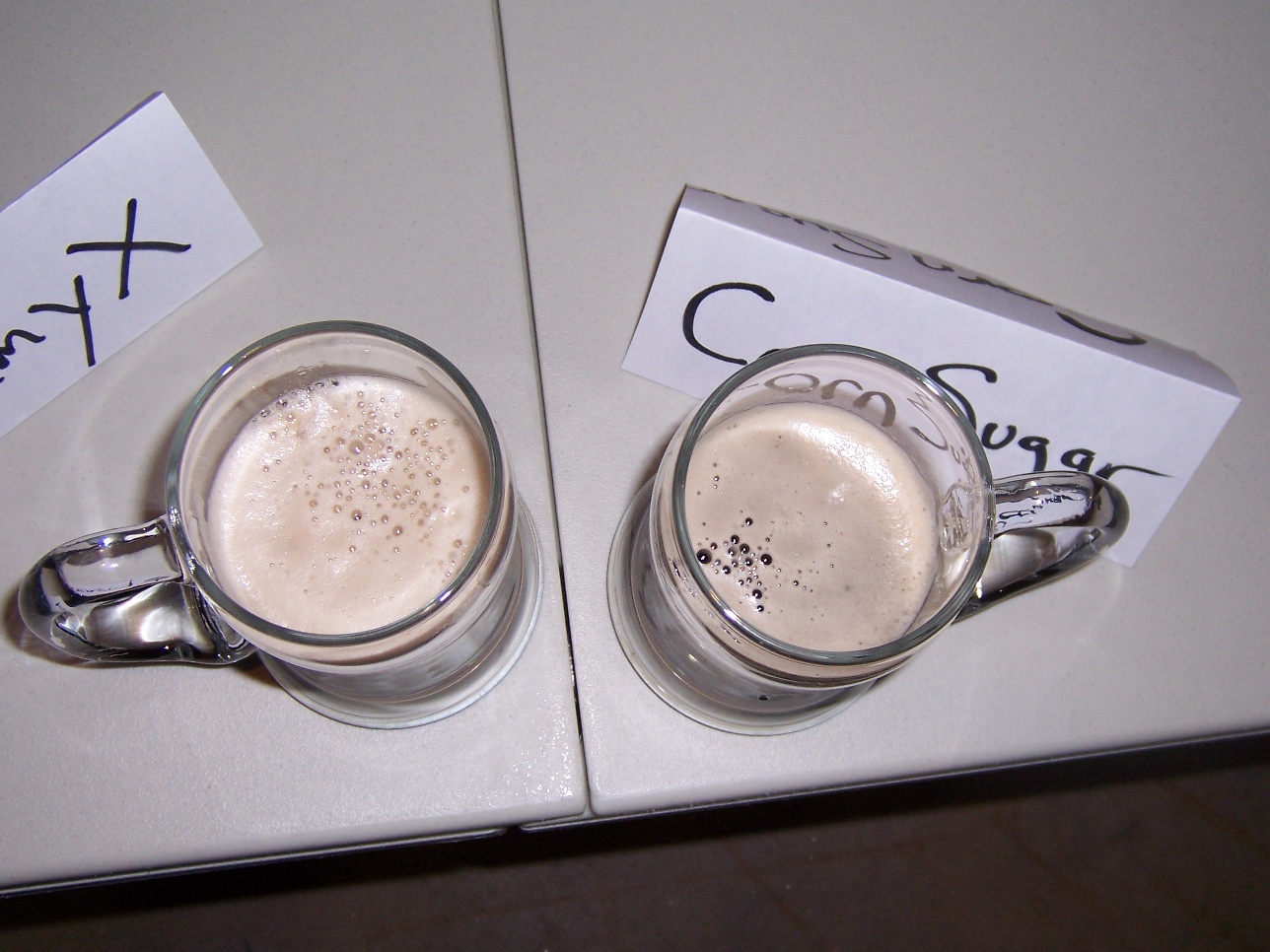
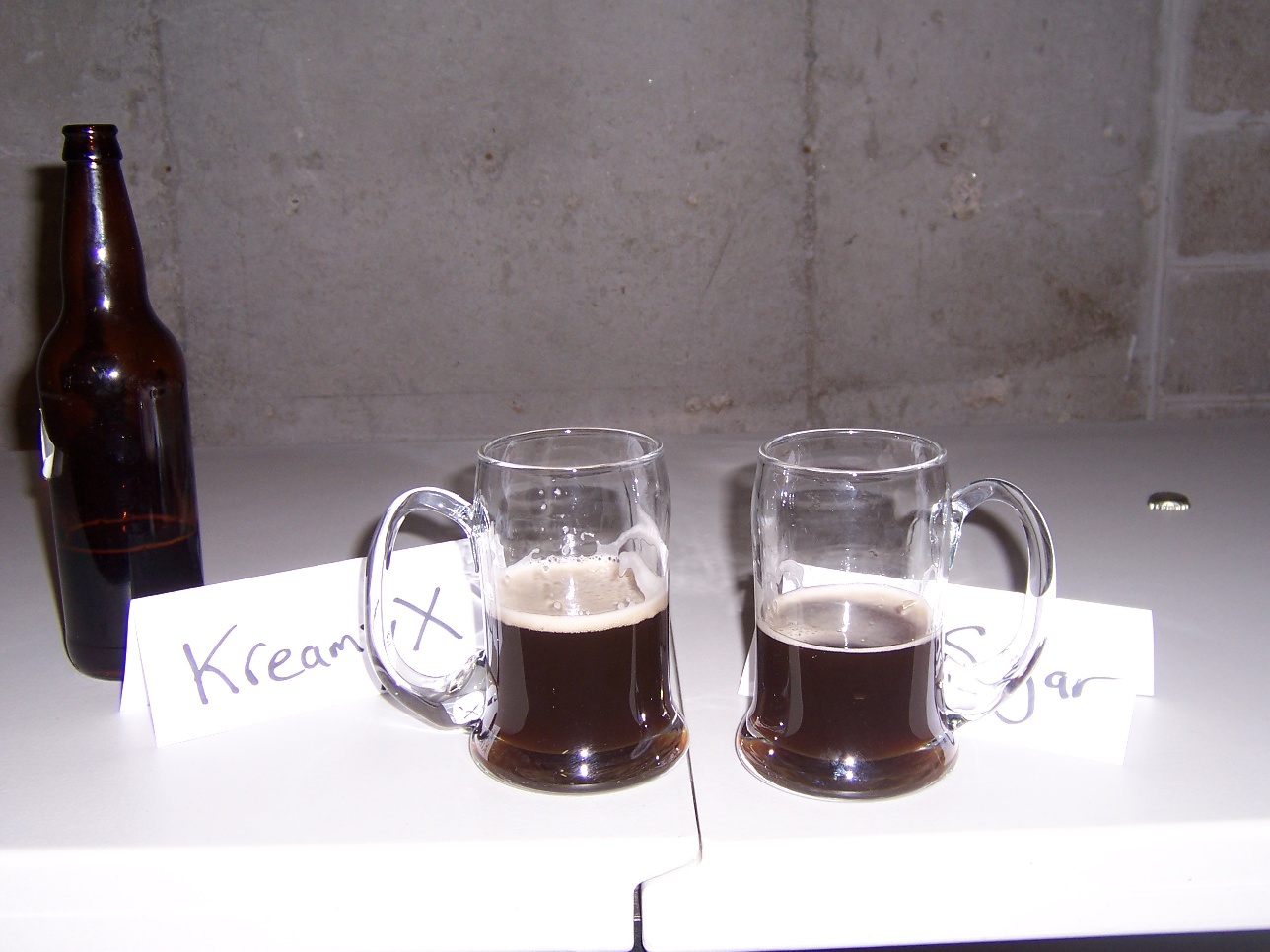
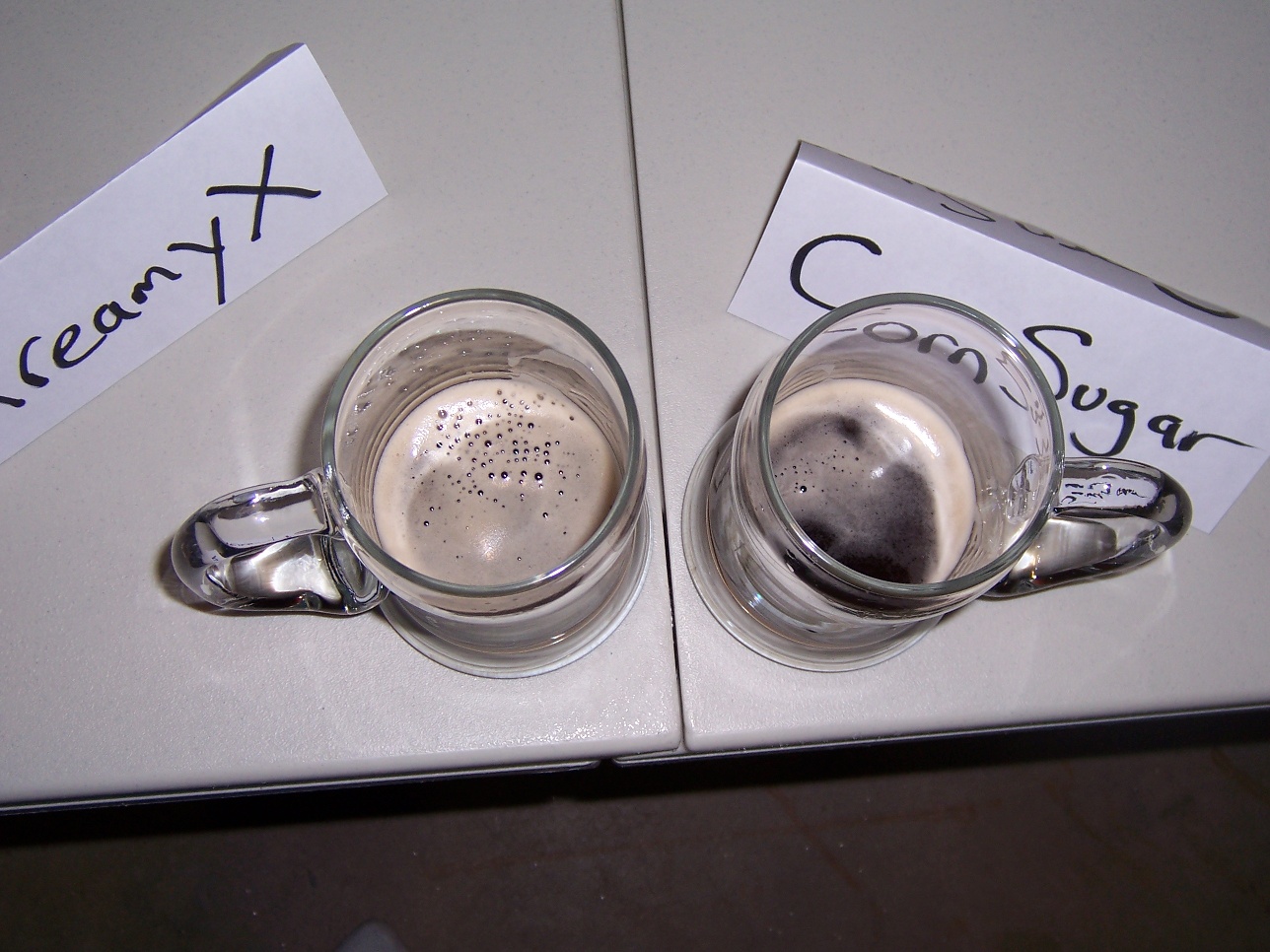
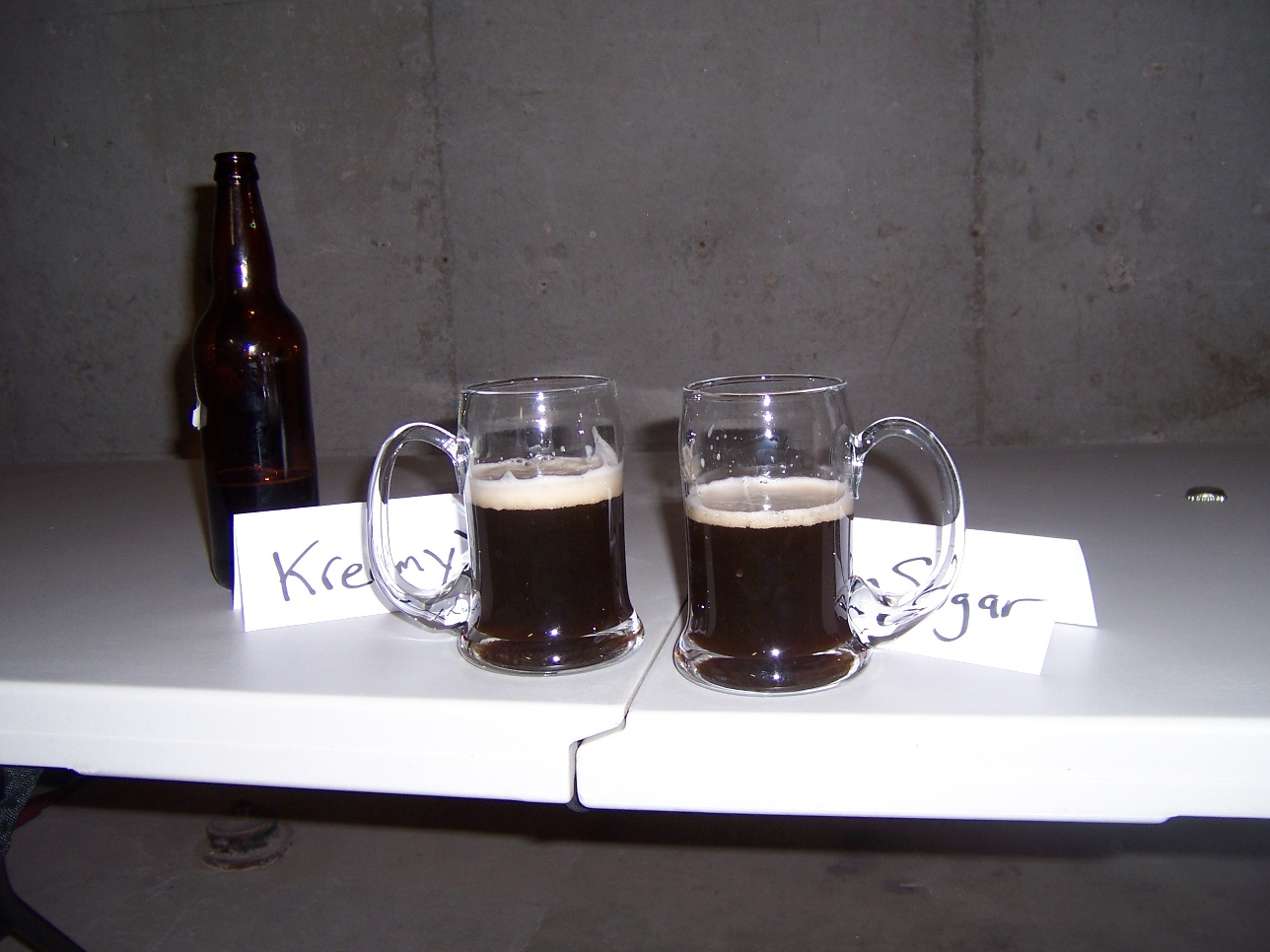
Last night, two bottles were opened up and the contents were placed side by side:

KreamyX vs Corn Sugar - First Sip

KreamyX vs Corn Sugar - First Sip Overhead

KreamyX vs Corn Sugar - Second Sip

KreamyX vs Corn Sugar - Second Sip Overhead

Well, I don’t know what your take is from the photos above but it appears to me that KreamyX produced a fuller head that lasted longer.  The beer with the corn sugar as a priming solution had a nice head too, but the KreamyX outperformed it.


Saison Recipe

Since I have been reading more about the style and the history of the beer, I thought I would post this Saison recipe. Bière de saison looks to be the original homebrewer’s beer. It is a style that comes from the beers farmers would brew in the French speaking part of Belgium known as Wallonia.

Because the beers were brewed by different farmers, the style is hard to characterize. I think that’s great.  It gives us more freedom to create interesting beers.

Brew Your Own’s Saison Guidelines

BYO had a great article on the style by Horst Dornbusch, which I read and drew up this recipe based on his thoughts and techniques that he presented in the magazine.

The big tip that I got out of it was that spices could be added to this beer, but Horst’s thoughts were to try to get a good Saison spicy flavor from the yeast and the hops. I am going to follow his lead.

Fermentation will definitely be on the warmer side, probably in the 75 degree range. After primary, I will let it condition for a few months and pop one open in late spring/early summer.

Brew On!

Ingredients For The Saison Recipe

10 lbs. Belgian Pilsner Malt
12 oz. German Munich Malt
2 oz. Belgian Special B Malt
6 oz. Belgian Aromatic Malt
10 oz Belgian Wheat Malt
1.0 oz. Sterling Pellets at 7.50% AA – boiled at 60 minutes
0.50 oz. Saaz Pellets, 5.00% AA – boiled at 15 minutes

Yeast – White Labs WLP565 Belgian Saison I

Recipe Stats

Original Gravity: 1.058
Terminal Gravity: 1.011
Color: 11.21° SRM
Bitterness: 35.0 IBU
Alcohol % of volume: 6.2%
Saison Recipe

Thoughts On The Finished Beer

I think the main flavors you want to get out of this brew is spiciness from the hops and the yeast mixed with a tartness that is also coming from the yeast. Interesting note about the tartness, one of the most common statements I get from people who drink this beer is “I can’t believe there is no lemon in this beer.” after I answer their questions about the ingredients. With the high fermentation temperatures, you do get some nice spicy and sour flavors blending with each other.

I have brewed this recipe a few times and have made slight modifications with each session. There are many different saison yeast strains available now so most of my experimentation has been with using different ones. I still like the WLP565 one the best. As long as you can get your temperatures over 80° F, towards the end of the fermentation, you should be able to finish with the gravity that you are targeting with this or any recipe you put together.

Some say that this strain can stop working but I have never had that problem. Make a mighty starter before you brew and you should not have a problem with your beer.

One disclaimer, I have never received an award in a homebrew competition for any saison I have submitted.  Although the guidelines for this style are wide open, if your saison does not taste like the a Saison Dupont clone, I don’t think you are going to get too far with judges.  Just my two cents but that should not stop you from brewing an excellent version of this awesome beer style.
Braggot Honey and Malt Style Profile

Braggot…

I love that name for a style of beer, fermented beverage…whatever you want to call it.

Braggot is in its simplest form a 50/50 blend of Honey and Malt.

We know 100% malt fermentation as Beer. And if you didn’t know already, 100% honey fermentation is a Mead.  When they come together in significant ratios, it is known as a Braggot.

I haven’t had too many Braggots.  The best of my memory brings back trying Brother Adam Braggot from the Atlantic Brewery in Maine.

Braggot should strike a balance between beer flavors and mead flavors.  Just like any mead or beer, the residual sweetness, tartness, dryness, etc. etc. will vary with the ration of honey to malt and the style of beer or type of honey being used.

You don’t hear a lot about Braggot these days, but the style mystifies me.  I have only had a few meads but the couple I have had were great.

Brewing this style, I would suppose that a simple blend of clover honey and DME would be a good start.  Balancing out the gravity of each together to get that 50/50 blend.  I would expect to use perhaps either a good American Ale yeast for its clean characters, however a mead yeast with a higher alcohol tolerance may be better suited to help dry out the product.  So many options.

This style may be a good one to experiment with in the upcoming new year.  But I wanted to write about to help me start thinking about using more honey in brewing and maybe a Braggot is a good way to combine my depth of experience in beer brewing with mead making before diving headlong into outright mead making.

Page 276 of 322

Powered by WordPress & Theme by Anders Norén