Brew Dudes

Homebrewing Blog and Resource

The hobby of homebrewing beer

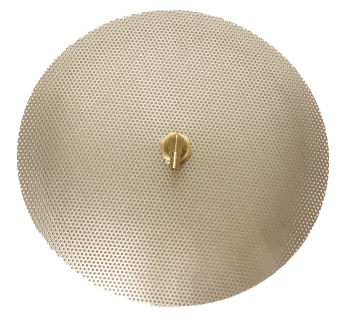
Bazooka Screen

If  you have been following the false bottom conversation, you will find this post is a logical follow up.

As I am looking at all of my options to enhance my brewing setup to be all-grain ready, the second option in helping me separate grain from wort in my mash tun is a Bazooka Screen (This appears to be a trademarked term of the Zymico company-you may be able to find alternatives under the term ‘mash screen’).

There is some debate on our site and elsewhere that the screen works better than the false bottom.  There is definitely a price difference.  False bottoms (most prices I saw are >$30 as of 1/9/2009) are more expensive than the screen (most prices are <$20 as of 1/9/2009).

The other factor that I am using to base my decision is the compatibility with another component I have to buy, which is a ball valve spigot that I want to fit onto my cooler.  I will write a post on the spigot later.

The screen may be the winner….although it would be interesting to get the false bottom for educational purposes and compare it to a screen.  Hmmm.

  Bazooka Screen

False Bottom

With all the encouragement from the readers, I started to think seriously about what I need to buy to upgrade my mash tun to brew all grain batches.

I mean, I guess I could brew all grain right now but it is not ideal.

I would rather get some components that would make the process easier and set me up for brewing success rather than brewing struggles.

The first component I am investigating is a false bottom.  I need a way to separate the grains from the wort effectively after mashing.

Since my mash tun is a 5 gallon cooler (along with many other homebrewers), there are false bottoms available that fit perfectly.

Here’s a picture from Northern Brewer:

Stainless False Bottom

This is one possibility since I could buy a screen as well.  What do you use?

Here’s my post about the bazooka screen.

Admiral Hops

Taking a look at some other bittering hop varieties, I stumbled across Admiral hops.  High ranked hops tend to get my attention.  Here’s a profile of this hop variety.

Origin: The UK.  It was bred from Challenger and Northdown at Horticulture Research International (HRI) at Wye College in England to expand the number of bittering hops available in the UK.  It was released to the public in 1998.

Aroma: According to some texts, not much.  Some declared it gives a citrusy, orange flavor to any beer.

Alpha Acid: 13.5 – 16.2%

Typical Usage:  Bittering.

Beer Styles: English style IPA.  Probably good for bittering in other English style beers.  One note:  Some brewers were posting that they were not impressed with the bittering capabilities of Admiral hops.  They said they wished they had used more in their brews.   If you try them, let us know.

Looking Back At 2008

Just looking at a post from last year:

Here are my BrewYear Resolutions:

1. Brew my first all grain batch.

2. Brew a lager beer.

3. Get more involved with online brewing community.

4. Finish reading How To Brew.

5. Work towards making Brew Dudes a good homebrewing resource.

Let’s check the list this time next year and see how I did.

Is 2 and a half out of 5 ok?

I have not brewed an all grain batch all by my lonesome. I haven’t brewed a lager yet. I have gotten involved with the online brewing community. I have read How To Brew for the most part (I skipped a few chapters) and the last one is debatable.

I think I should try to knock out this list completely before I add anything to it, don’t you?

Brewer’s Yeast

It’s another edition of Fermentation Friday.  This month, it is being hosted by the guys at Rooftop Brew.  The subject for this time around is all about brewer’s yeast.

Mike sez:

Always make a starter… You hear time after time. I (Mike) have recommended it a thousands of times.  Practical experience in the brew-garage has shown that making a starter for yeast is the way to go.  The beer always seems better for it.  Better lag times, better fermentation, better flocculation, better post-ferment properties….and of course better flavor.
All things being equal however, Mike uses dry yeast for most brews.  With a young child at home, there never seems to be enough time to make that starter and babysit it while….when babysitting an actual child.  A starter really isn’t that much work but the pre-planning stage is a time sucker.  The opportunity to brew usually comes after the “make a starter” window has passed.  So dry yeast to the rescue.
Dry yeast is great because it is relatively ready to pitch. The cell count in one 11-14 gram packet is generally high enough to tackle any brew under a 1.055-1.060 OG.  It is recommended to rehydrate the yeast in some plain water prior to pitching, and that is the standard practice in the brew-garage.  If laziness does take over and results in the dreaded direct pitch into the wort, then 2 packets can get pitched dry to make up for the poor yeast performance due to the rehydration effects in the sugar solution (wort).  Usually pitching directly results in a ~40-50% cell viability loss in the packet.
The two favorite yeasts of Mike’s are both Fermentis products.  The US-05 American ale and the S-04 (safale) English Ale yeast.  These are fairly cheap products, easy to use and work even better on repitch from cake! But that’s another post.

BREW ON!

John sez:

I think, in the coming year, I would like to understand the number of yeast cells to gallons of wort cold.  I will probably get to know Mr. Malty’s pitching rate calculator pretty well.  I echo Mike’s statements about making a starter.  I think for me, I would like to get even more precise in what size starter I need to make and just get better equipped to make a starter each and every time.

As for other thoughts about yeast, I use liquid yeast:  White Labs primarily.   I like the variety and I have had good results with their line of yeast strains.  I think homebrewers tend to not focus on yeast as an ingredient.  A lot of attention gets focused on malts and hops.  Don’t get me wrong, they are very important.  The other two main ingredients (water and yeast) are important too.   With more attention paid towards yeast strains and yeast preparation, many homebrewers will be on their way to making not only good beers, but great beers.


Page 275 of 322

Powered by WordPress & Theme by Anders Norén