
Brew Dudes

Homebrewing Blog and Resource

The hobby of homebrewing beer

British Strong Ale – Jar of Destiny

Welcome to the first output from our Homebrew Jar of Destiny series. As we let a jar let us tell us what beers to brew this year, we show off the output of one of the first selections: British Strong Ale. Let us take you through our thoughts about the style and our notes on Mike’s example of this beer.

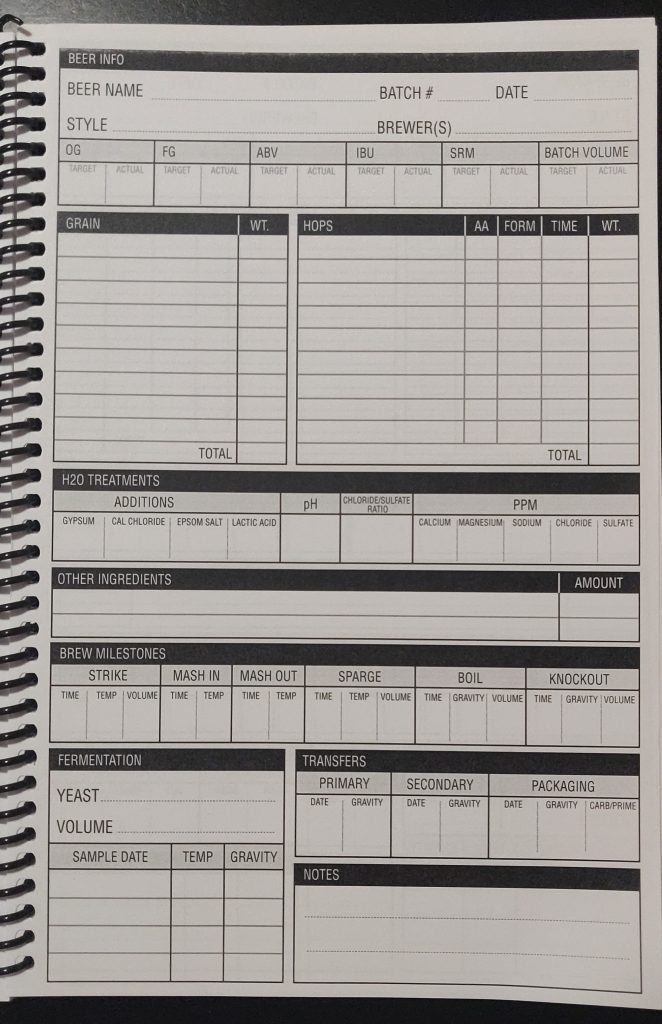
British Strong Ale Recipe

Here’s the recipe Mike formulated based on the 2015 guidelines in the BJCP:

Batch Size: 6.5 Gallon
75% efficiency

Ingredients

Grains:
14.5 pounds (6.57 kg) of Maris Otter from Fawcett
0.5 pounds (226 g) of Amber Malt (22°L)
0.5 pounds (226 g) of Simpsons DRC* (152°L)
*Trademarked term – short of dark roasted crystal

Hops:
2 ounces (56 g) of Challenger at 6.3%AA, boiled for 60 minutes (35 IBUs)
1 ounce (28 g) of East Kent Goldings at 4.2%AA, boiled for 30 minutes (11 IBUs)
1 ounce (28 g) of East Kent Goldings at 4.2%AA, boiled for 10 minutes

Yeast:
Wyeast 1968 – London ESB Yeast

Instructions

Mash grist following this schedule:
145°F (63°C) for 45 minutes
156°F (69°C) for 20 minutes
168°F (76°C) for 10 minutes as a mash out step.

Boil wort for 60 minutes, adding hops at appropriate times.

After the boil, chill wort to 63°F (17°C) and pitch yeat. Let beer free rise to 68°F (20°C) and hold until complete.
Sample beer and perform diacetyl rest if need be.

Tasting Notes

Man, this beer was good. It was malty and easy drinking – belying its ‘strong’ nature. Sorry, I am getting ahead of myself. Let’s start with how it looked.

The color was a beautiful copper color and, without the chill haze, would be brilliant. If we taste with our eyes, this color brings back pleasant memories of sitting at the bar in Gritty McDuff’s in Portland, ME. Many of their beers have this same color in my mind.

The aroma had graham cracker malt notes with some hints of spicy/herby hops. I didn’t detect any alcohol notes, which is fine by me.

The flavor followed through with rich, malty flavors, and I dare say it was sweet to my palate. The malt flavors were balanced with the hops in the aftertaste, with a nice bittering presence delivered by the Challenger hops.

Our overall impression is that this style is perfect as a season transition beer. As winter turns to spring, this beer is something I would reach for on the cool days. It would be a good late fall beer too.

I’m glad we brewed this style. Thank you, Jar of Destiny.

Check out our other Jar of Destiny beer(s): Black IPA

Check out the Second Picks!
Check out the Belgian Tripel post
Check out the International Amber Lager post

BREW ON!

2021 BJCP Style Guidelines Update

2021 BJCP Guidelines Update

We ended 2021 and/or started off 2022 with the homebrew Jar of Destiny The choices in the jar were all based on the 2015 guidelines. Of course, right after we chose our first wooden nickels, we learned there was a change at the old beer judge certification program. Learn more about what we think about the 2021 BJCP guidelines update.

What Changed?

Well, thankfully – it wasn’t a revision. We would need to throw out all of the wooden nickels in the Jar o’ Destiny. A BJCP update just has some small changes. Here are some of them:

  • Sour beers had some descriptors adjusted and there is a new Straight Sour Beer style.
  • Sweet Beers saw some changes along with an added Specialty Spice Beer style.
  • Oh yeah, New England IPAs are now Hazy IPAs. You couldn’t let NE have that one, eh?

All in all, the 2021 BJCP guidelines update wasn’t too shattering. We do like what the organization has done to improve beer knowledge and to encourage people to become judges. Mike has some issues with the revision that happened back in 2015 since it had more of a historical bent rather than a categorization by style. He liked having all the stouts in one place and all the IPAs in one place.

Mike was also saying that people sometimes mistake the beers listed as commercial examples of the style to be in some sort of order. Instead of just a number of beers added as examples, the first one was understood to be the most representative version of the style. Now, I never saw it as that but can see how people could. I think sometimes we make this beer thing too complex for our own good. Just relax, right?

In these troubled times, I’d rather have things that are simple and good.

Brew ON!

Is Homebrewing in Decline?

Is Homebrewing In Decline?

COVID-19 reared its ugly head at Mike’s house and we had to quarantine again. Staying separate and hearing the news about a long standing homebrew shop closing its doors after 30+ years of operation had us thinking about the state of the hobby. Were the commenters right? Is homebrewing no longer needed because good beer is everywhere? Mike and I talked about the decline of homebrewing beer in this beer.

Long Live Homebrewing

When we picked up our first homebrewing kit, we didn’t know were were going to be blogging/vlogging about it. Over time, we felt compelled to broadcast about our take on the hobby and started this little site.

One of our favorite shops was the Modern Homebrew Emporium on Mass Ave. Working in that area made it convenient for us to pick up things we needed for the weekend brew. The staff was friendly and helpful – even if I had to pay a parking ticket or two because I got caught up in a chat (always feed the meter!)

It’s sad to think that the shop wasn’t going to be an option for us to pick up ingredients and equipment. When I read the article, the comments described a hobby that didn’t need to be anymore. Good beer was everywhere. Kits were expensive. Who has the time?

After talking about it with Mike, it’s true that it’s not as popular as it once was. Maybe there was a level of people who brewed one or two batches and then gave up because it wasn’t great. When you can find great beer in your local store and the only effort for you is to open the can, I can’t argue with that.

What I can argue is that this hobby provides an outlet for your left and right sides of your brains and a chance to meet some great people. Homebrew peeps are the greatest peeps. Thanks for reading and brew on!

Flaked Adjunct Comparison

Flaked Adjunct Comparison – Corn (Maize) Vs. Rice

Just like I brewed three beers with flaked grains to understand what mouthfeel characteristics they brought to NEIPAs, Mike brewed three beers for a flaked adjunct comparison. We wanted to understand the difference between flaked grains that lighten beers. Check out this video where we taste and discuss our findings.

Look at the rocky heads on those beers!

Flaked Grains to Lighten Beers

I am not sure if this sentiment still exists, but brewing with rice or corn was frowned upon when we first started brewing. Maybe this notion is a relic of the past, but brewing all malt beers (without adjuncts) were a way to show the world that homebrewers didn’t cut corners on ingredients. With time, Mike and I have come to understand that these flaked grains are just another color on the palette. They should be used when needed for the desired result.

Even though we understood it was ok to brew with them, we don’t have much brewing experience. We have brewed with flaked corn (maize) before but not rice. This experiment was conducted to help us understand the difference between the two.

What Differences Did We Pick Up?

Mike brewed three small batch brews. The first one was an all-malt beer to be used as our control. The second one was brewed with the same malt, but 10 percent of the grain bill was replaced with flaked corn. The third and last beer – the same deal. It was also brewed with that base malt but 10 percent of the grain bill was flaked rice.

All Malt Beer – Tasting this beer set our baseline for flaked adjunct comparison. Once we tasted the other two, the body of this beer seemed quite heavy. It was clear that using either of these flaked grains as 10 percent of the grain bill would have a dramatic effect on the body of your beer.

Beer Brewed with Flaked Corn – Again, certainly had a lighter body than the control. There was a perceived sweetness in the aroma. That same sweetness was slightly present in the flavor.

Beer Brewed with Flaked Rice – The body of this beer was the same as the flaked corn one. The aroma and flavor was cleaner – it didn’t have the same notes as the corn beer did.

Overall, this comparison was enlightening (pun intended). I personally would like to brew with some flaked rice this summer to brew a clean light lager for those days you need a refreshing thirst quencher.

What’s your experience with these flaked grains?

BREW ON!

Palisade Hops SMaSH Beer Tasting

One malt and one hop – everybody knows the rules. We brew these small batch beers to learn more about hop varieties. We have put together many of these different video profiles over the years but there’s always room for one more.

Palisade hops have been on the market for a while so it wasn’t high on our priority list. But with a packet of Yakima Chief Cryo Palisade hops in our stash, we jumped at the chance to brew a one gallon batch!

Our SMaSH Beer Process

Just in case you haven’t seen one of these SMaSH beer tastings before, let us run down the process. All the SMaSH beers we brew are 1 US gallon (3.78 L) batches. With 2 pounds of some base malt (typically Pilsner or Pale malt), one ounce of hops is used during the brew process to showcase the hops. The additions generally follow this schedule:

1st hop addition – 1/4 of an ounce or 7 grams – 15 minutes to go in the boil

2nd hop addition – 5/8 of an ounce or 14 grams – Flameout

3rd hop addition – 1/4 of an ounce or 7 grams – Day 3 of fermentation

After mashing at 150°F or 66°C with 2 gallons (7.6 L) of water for 1 hour and boiling for 1 hour, fermentation happens over the course of 10 days at 68°F (20°C) using SafAle US-05 yeast (about a third of the packet or a little less than 4 grams)

Our Palisade Hops Take

When we poured this beer, we detected a fine aroma with notes of herbs and fresh cut grass. There was also a hint of something citrus in there. The combination with the earthy grass aroma made Mike think of limes.

The commercial descriptors of Palisade list it as being grassy with a note of apricots. As the beer warmed, we slightly detected something in the fruity/sweet realm but it was too subtle to pick out.

Overall, we think this hop would be a nice addition to a West Coast Style IPA or could be a nice balancing hop to a NEIPA if you want to have a bit of bitterness in there as well. It would not be a traditional hop for the hazy ale loving crowd, but who cares. It’s homebrewing and you should have freedom to brew how you want.

Let us know your Palisade hops adventures.

BREW ON!

Page 43 of 317