Brew Dudes

Homebrewing Blog and Resource

The hobby of homebrewing beer

Simple Hefeweizen Recipe

Summer is on the way and its time to start thinking about your favorite thirst quencher.
In the summer, wheat beers are probably one of the most popular brews to start with. Some other summer brews include Cream Ale, Lawnmower Beer, and Summer Ale.

This recipe is about as easy as it gets. The beauty of doing a good wheat is that quality results lie in your process, not so much in your recipe.

All the experts agree that fermenting your Weizen at 62F to 65F degrees gives you the best ratio of banana to clove and keeps a lot of the harsher phenols and alcohols under control. Be sure to pitch a large enough and healthy starter with this one. Don’t skimp on the aeration or oxygenation as well.

Here is my basic wheat to get you started:

EASY SUMMER WHEAT
Batch size: 5 gallons
O.G.: 1.049
IBUs: 12-14

6.6lbs LME Wheat extract
0.85 oz Tettnager hop pellets (4.5%AA), 60 minute addition
WLP300 Hefeweizen Ale yeast

Boil the hops with the extract for 60 minutes. Chill quickly to pitching temps and add yeast starter. This beer should ferment out rather quickly and be ready for the bottle within 10-12 days if your yeast was fresh.

You can go from brewing to drinking with this one in about 3 weeks.

For variation, you can steep in some light crystal malts, or some American Victory malt if you want a more complex malt character. I’d suggest you stick with the base recipe, at least for a first pass to see how the flavors evolve. The key difference in this beer brewer to brewer will be the brand of Wheat LME you purchase, they all have different color ratings, and different wheat to base malt ratios. So maybe some experimentation will be needed with different brands if the beer isn’t exactly what you are looking for.

Remember that even though the recipe is simple, be vigilant with your fermentation process to get the right flavor profile.

Brew on!

Other Wheat Beer Recipes – Click on a link below and continue to brew on:
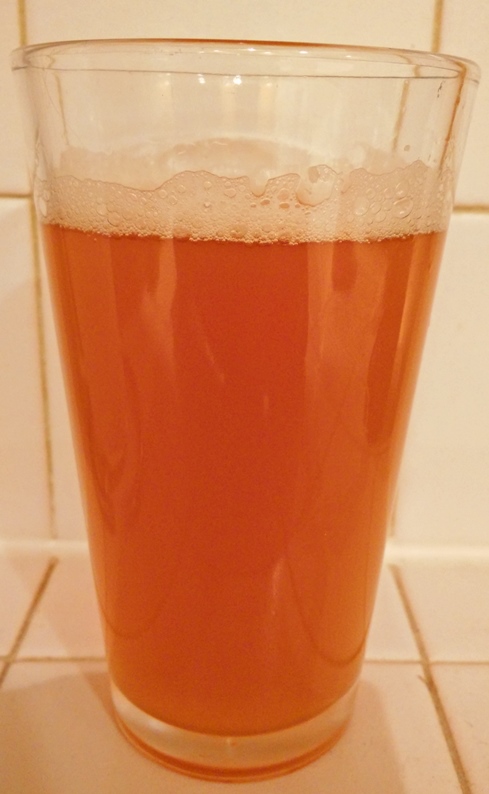
Orange Wheat Beer Recipe

American Wheat Ale Recipe

Belgian White Ale Recipe

Last Day For LongShot Submissions

Just got this email from some guy named Samuel Adams:

Hello Homebrewers,

Your entries in the 2008 Samuel Adams American Homebrew Contest® - LongShot have been pouring into the drop locations. Unfortunately the entry window closes today (May 1st).

Please do not fret if your status on the website still reads as "pending". Our good friends at Beer, Beer, & More Beer in California, Two Brother's Brewing in Chicago, and the Samuel Adams Brewery in Boston are hard at work opening the boxes, sorting the entries, and logging them into the system.

We're hoping to have all entries logged over the next few days but his process may take a week or so due to the volume of entries. Once your entry is processed into the system, you will receive an automatic email notifying you of your status.

Please know that your beers will be handled and stored with the same quality of care that you put into brewing them. First round judging events will take place throughout the month of May and into early June. You will receive your score sheets a few weeks after that.

We're looking forward to tasting your beer! Good luck and happy homebrewing
!

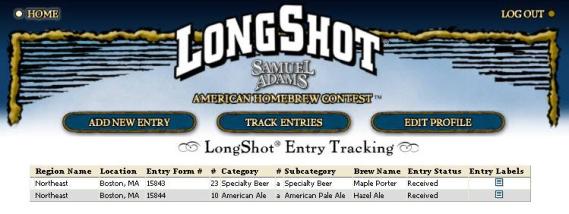
My brews are in and the status has changed from “Pending” to “Received” for both.

LongShot Competition Status

Brew On!

Summer Ale Recipe

Summer’s (almost?) here and the time is right…for brewing in the street….or at least outside. Ok, that was just awful. Warm temperatures mean BBQs and beers for thirst quenching. We have a whole bunch of recipes queued up for the upcoming days of summer. I am starting it off with a summer ale recipe.

This is an extract recipe but can be easily converted to all grain by switching out the dry malt extract with 9 pounds of American 2-row malt. You can use other pale malts, even pilsner, but when I have brewed a non-extract version of this beer, it has been with 2-row. Mashing all the grains together at 150° F for 60 minutes will give you what you need to boil

Check out the details below:

Ingredients:

5.5 lbs Dry Extra Light Malt Extract
0.5 lbs Cara-Pils Malt
0.25 lbs Wheat Malt
0.25 lbs Munich Malt
0.5 oz of Chinook Hops pellets (boiled at 60 mins to go in the boil)
0.5 oz of Sterling Hops pellets (boiled at 15 mins left)
0.5 oz of Sterling Hops pellets (boiled at 5 mins left)
1.0 oz lemon zest (boiled at 5 mins)
0.25 oz to 0.5 oz ginger root (boiled at 5 mins)
Yeast: White Labs WLP008 East Coast Ale Yeast

Step by Step:

Steep Munich, Wheat, and Cara-Pils malt in 2 gallons of 150° F water for 45 minutes. Add to boil with Malt Extract and Chinook hops and boil for 60 minutes total.
Add first addition of Sterling hops at 15 mins. Add lemon zest (I buy 4 big lemons and use a microplane grater to get the amount of zest I need for the recipe), ginger root (Grate this as well. Try the low range of the scale presented in the recipe first), and second addition of Sterling hops with 5 minutes to go in the boil.  See comments below for more instructions.

Cool wort to 70° F, pitch yeast, and ferment for two weeks, maintaining 70°F temp.

OG: 1.053
FG: 1.012
Color: 4.13 SRM
Bitterness: 35.1 IBU
Alcohol (% by volume): 5.4%

Recipe Notes:

Summer Ale Recipe

I have brewed this beer several times since I posted the summer ale recipe back in 2008. At that time, I was trying to emulate commercial summer beers that were available to us in the MA area that were basically simple ales with a few special ingredients like the ones offered from Sam Adams and Harpoon.

The most important thing to keep in mind when following this recipe is to have a good fermentation. You want this beer to finish dry and to let the ginger, lemon, and hops be the main focus in the taste and the aroma. Make sure you use a yeast strain that attenuates well and pitch a mighty starter and maintain the fermentation temperature.

As time as gone on, I have grown to like wheat beer a lot more for summer brews. Another version of this recipe would to be replace the entire grain bill with wheat malt extract, 6 pounds to be exact. I think that would showcase the tang of the lemon, the spice of the ginger, and the earthiness of the Chinook and Sterling hops

Hope this recipe serves you well since summer time is a great time for homebrew.

Brew on!

Better Bottle Mishap

This past weekend I bottled up my Kolsch and IPA. I had brewed the Kolsch in a “Better Bottle” carboy. You may have seen or heard of these carboys at your local brew shop, or in your favorite brewing magazine (like Brew Your Own).

I only have one of these, but I love it. Primarily because it’s much lighter and significantly less fragile than the traditional glass carboys that many of us have. I strongly endorse these carboys for primary fermentation, even as a seconday container. I would still use glass if I was brewing an imperial stout for aging or something with a bacteria addition or “wild” yeast addition. But for most applications I think the Better Bottle is the best substitute out there for doing ferments in.

I have been using my buckets to do most of my fermentation in mainly because of their ease of cleaning. However, my buckets are getting tired and I think I may start to replace them with a couple Better Bottles. There is however, on small issue with the Better Bottle that I was painfully reminded of this weekend when bottling.

Because these things are plastic, they are mildly malleable. I tend to put my carboys (glass or otherwise) in a milk crate to help carry them around. This is a great way to support the carboy and pick it up when it’s full as they are difficult to grab onto. As I lifted the carboy out of the milk crate to put it on the kitchen counter, the bottom of the carboy flexed down a little bit with the weight of the beer inside it. This change in shape creates just enough of a plunger effect that a vacuum was created and it sucked a bit of air from the airlock into the beer as I lifted it!

As I put it on the counter, I said “DAMN” to myself. Brewing up a Kolsch is a bit more work than a tradition ale and I may have contaminated it right at that moment with the airlock water. The lesson learned here is that Better Bottles are great, but just don’t take them out of the milk crate when they are filled with beer because of that flexible plastic issue. The saddest part of the story is that this has happened to me before, but I just don’t use my Better Bottle often enough to have remembered that.

So I’ll just be sure to drink up the Kolsch fast enough that if there is a mild contaminant in there it won’t have a chance to spoil the beer too quickly.

Lesson learned,
Brew ON!

Check out our earlier post on Better Bottles!

Bottling Day: IPA and Kolsch

With the gracious help of my wife, we got the IPA and the Kolsch bottled up. These two beers were made out of the same mash, then tweaked with steeping grains as I reported back on my Double Brew Day post.

My kegerator is dead, and has since been hauled out to make more room in my garage. So back to bottling for this devotee of home kegging. I didn’t have any corn sugar on hand, so I just used 3oz of table sugar (sucrose) for my priming agent. I considered using DME, but I wanted the beers to carb up quickly and DME priming can take a little longer than refined sugars. Both beers spent three weeks in primary and were looking nice and clear in the carboy.

Everything went as planned. The IPA had a finishing gravity of 1.014 and the Kolsch was a dry 1.009. I had considered dry hopping the IPA with 2 oz of Cascade, but the aroma from the later hop additions was already great, so I decided to save those Cascades for an American Brown in the near future.

We are certainly looking forward to tasting these two beers once they are ready. As this was the first time I have used Columbus and Centennial hops (IPA), I was pleased with their aroma and flavor. We’ll have to see how the beer is all carbed up and conditioned. I’ll post back with pictures of each beer and a taste review in a couple weeks.

Be sure to look for my next post on using the Better Bottle carboy as I totally forgot about one key factor about them that may have ruined the Kolsch.

Brew ON!

Page 296 of 322

Powered by WordPress & Theme by Anders Norén