Brew Dudes

Homebrewing Blog and Resource

The hobby of homebrewing beer

Vienna Lager Tasting

I put together the same setup as I did with the Bohemian Pilsner tasting a few weeks back. Mike does not know which beer is the one I brewed vs. one that you can buy in a grocery store.

I am chuckling in the video because to me it was pretty obvious which one was which from the start, but Mike plays along which is all you can ask for.

My aggressive pour made for a cloudy experience on camera. So much for the bold statement of “this is the best beer I have ever brewed” from an earlier video”. We will have to see how this one does in competition to see how it stacks up to the style.

If you want to see some of the related Vienna Lager posts, check them out below:

Vienna Lager Recipe

Vienna Lager Brew Day

Sinamar

Belma Hops

Hop profile on the new hop variety Belma. This trademarked hop variety was introduced in late 2012 by Hops Direct, LLC and Puterbaugh Farms.   They are named after a small community that once existed in Washington State.

Unfortunately, it appears to be sold out until this year’s harvest but it has stirred up some interest from commercial and homebrewers alike.

From the Hops Direct site, they stated that Dr. Tom Shellhammer from Oregon State University brewed up a pale ale with them. Actually, the page stated he create a Pale Ale Malt, but I am thinking it was a typo. In any case, he had some good descriptors of the aroma and flavors.

Around the web, other people brewed with them and posted their findings. From what I read, the consensus is that Belma is a distinctive, pleasant hop variety but doesn’t pack the punch of some other American hop varieties. It’s milder in terms of its intensity.

Bear Flavored Ales had a good write up of their Belma single hop IPA.

Here’s the rundown for this new variety:

Origin: USA. Yakima Valley of Washington State

Aroma/Flavor: Orange, melon, strawberry, with some grapefruit and tropical fruit notes

Alpha Acid: 9.8% – 12.1%

Typical Usage: Dual Purpose

Beer Styles: It seemed like many homebrewers who tested them out brewed IPAs with them and were happy with the results but the variety seemed too mild for the style.

This reaction reminded me of brewing with Glacier hops.

With the fruitiness that Belma brings, there were suggestions of brewing a saison with them.  With the aroma/flavor profile,  I think these hops would be great in style where you want to showcase hop fruitiness.  Maybe an American wheat beer where you split a batch and add fruit to one and left the other half for dry hopping with Belma.   Maybe I just made a brew plan for the next time these hops are available.

Thanks to Señor Brew for the hop profile suggestion.

Primary Fermentation

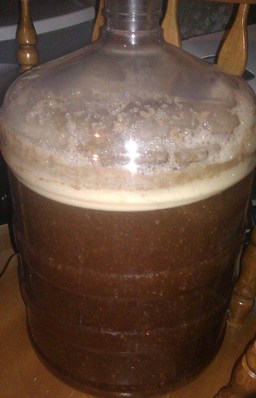
Looking for more information about primary fermentation? This is the definitive post to answer the questions of what it is and how long it should last.

Definition of Primary Fermentation

We define primary fermentation as the process of introducing a fermenting microbe to your wort or must until its process is complete or interrupted/merged with a second process.

It truly is the magic that occurs to make:

  • Barley soup into beer
  • Grape juice into wine
  • Honey water mixture into mead
  • Apple juice into cider
  • Et cetera

How Long Should Primary Fermentation Last?

For homebrewing beer, the length of time for fermentation can vary.  If you are a beginner homebrewer and you are brewing an ale that doesn’t have a high starting gravity (less than 1.070) from a recipe kit, you should let your primary fermentation last 2 weeks. Just leave the beer in your primary fermentor for 14 days as a good rule of thumb.

There may be recipe kits out there that have instructions to only ferment the beer for 1 week and then bottle.  For example, when we started homebrewing over ten years ago – we followed recipe instructions from our local homebrew shop kits that had the one week fermentation step.

Over the years, the two week standard has served us well. Again, this is a good guideline for most ales that you brew when you first start out homebrewing.

Here are some points to keep in mind:

A fermentation duration of two weeks is not a written in stone rule. It could take shorter or it could take longer. The duration is determined by many factors including the yeast (the strain, its health, and the count of cells), your wort, and the temperature.

The best way to know that your fermentation is done is to take a gravity reading to see if your beer has fermented to its target final gravity.

To take a gravity reading, you will need special equipment like a hydrometer or a refractometer.  If you don’t have one of these pieces of equipment, we suggest you buy one or both as they are important in helping you understand your fermentation process.  To learn more, read these tips on how to take gravity readings during fermentation.

In our experience, a two week fermentation time is better than one; we have had better results letting our wort ferment for about fourteen days rather than seven. It gives the yeast more time to reprocess some of the early stage fermentation byproducts and time for the yeast to settle out.

You may see some recipes that call for racking to another carboy or other vessel for a secondary fermentation.  We don’t think it is a necessary step. Keeping your beer in one fermentation vessel for two weeks and then bottling or kegging is ideal. By skipping a secondary vessel conditioning phase, you are eliminating a chance for contamination. Also, we are of the opinion that conditioning most ales in a secondary vessel provides little to no flavor enhancements to the final beer that you can get from bottle or keg conditioning.

Follow this link to read more about secondary fermentation and when to skip the step.

We feel that secondary vessels should be used for high gravity beers, for lagering, for beers that are going to have post-fermentation additives (dry hopping, fruit, spices), and for beers that call for the addition of a second microorganism intended to feast on sugars that the primary strain does not.  You should use them for certain techniques or beer styles.  The point is, for most ales, a two week primary fermentation is all you need.
Primary Fermentation

Hopefully, this post has helped you out.  More information is available on the subject since there is a lot to understand as it is arguably the most important part of brewing beer. Many people have commented on this post over the years and we would like you to please leave a comment below if you have a specific question for us to answer.  Brew On!
Falconer’s Flight IPA Recipe

Brewed this Falconer’s Flight IPA Recipe  at the end of Decemeber 2012. Stay tuned for tasting notes and some video highlights.  Made my latest purchase of some bulk hops from NikoBrew!

 
Batch Size- 6.5gal
OG- 1.060
SRM- 6.5
IBUs- 55

6 lbs Belgian Pilsner Malt
6 lbs Belgian Pale Malt
1 lb Briess Crystal 20L
0.5 lb CaraPils
1.0 oz Falconers Flight (11.7%AA) 60min
1.0 oz Falconers Flight  (11.7%AA) 20min*
2.0 oz Falconers Flight  (11.7%AA) Dry Hop 10 days.
2 PK US-05 Fermentis American Ale

Mash temp 154F
*- employed a no chill technique. 20 min is time assumed for bittering a flameout addition without a chill step.
Ferment 3 days at 65F
Ferment 9 days at 70F
Crash cool to 50F, dry hops added directly to primary.

Sweet Potato Beer Tasting

We taped this video tasting the Sweet Potato beer that Mike brewed for Thanksgiving last year. He still had some bottles hanging around so we decided to crack a couple of them open and discuss.

When you use ingredients like sweet potato in your recipe, whatever sweetness they have going into the fermentor will be mostly to totally gone when they come out in the finished beer.  Mike used specialty malts to complement the finished flavor of the sweet potato in the beer with good success – at least from my perspective.

I think balance is also a good point for specialty beers like this one.  You can keep the base beer simple so that the added ingredient doesn’t compete with strong beer ingredients but also you want the added ingredient to play nice and have the beer still taste like a beer.

Anyway, enjoy the video – We are going to try to post one every Wednesday on the blog.

Page 176 of 322

Powered by WordPress & Theme by Anders Norén