Brew Dudes

Homebrewing Blog and Resource

The hobby of homebrewing beer

Braggot Bottling

After about two months of conditioning in a secondary vessel, I felt it was time to bottle the braggot. The bottle were all cleaned and sanitized over the weekend and the braggot seemed read to be racked and primed.

Since I am looking to get a nice carbonation going in the bottle, somewhere in the back of my mind there is some concern that the yeast may not be viable enough to eat the priming sugar, but we’ll see. This Scottish Ale yeast seems strong “like bull” and I am confident the braggot will carbonate and will continue to condition, clear, and become a delightful autumn time beverage.

The few tastings I have had of the braggot over the course of its young life have not been delightful. There is still a hotness from the alcohol and a strong bitterness from the Centennial hops. I have learned that you can’t judge a mead by the early tastings but there are some elements of the flavor that should get stronger like its malty background.
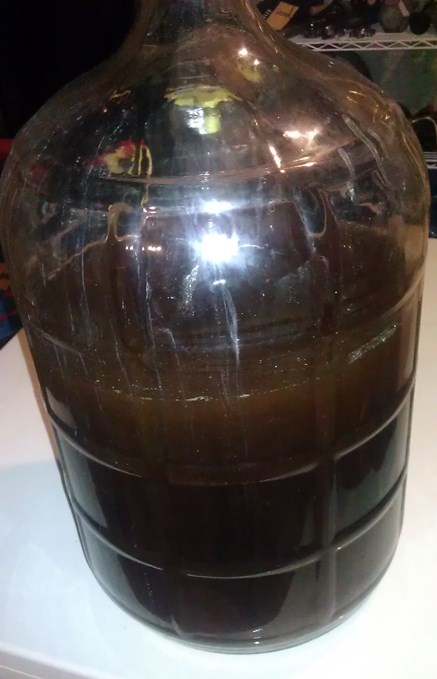
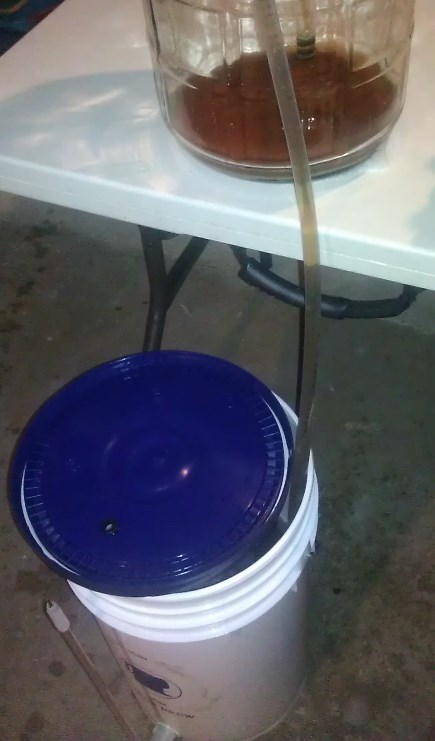
Braggot In Carboy Bottling Braggot

The alcohol burn and the hop bitterness should mellow over time. I think I need to bottle it up and forget about it for a few months. In the near future, on some late October night, I will come across this forgotten box of braggot bottles and I will be most pleased.

I can picture serving it in a tall Pilsner glass showing off its tawny color and rocky head. Signals of honey and malt with hops will be ready on the nose. The flavor will be bold and slightly warming and will be a perfect compliment to a long day of raking leaves.

But for now, it’s all about focusing on keeping everything clean and neat and making sure that the amount of air that gets into the finished braggot stays to a minimum.
Clarifying Mead

I have a few meads that have been conditioning in secondary vessels for a couple of months now. In the past, my meads have cleared up after a few weeks’ rest. With the summer coming on and the need for clean carboys increasing, I plan to jump start the process of clarifying mead.

Now given enough time, these meads should clear on their own. I am not sure about that. I did use raw, unfiltered honey and there may be a large number of particles that are in my mead that wouldn’t be if my honey was filtered.

Plus, this situation gives me an opportunity to experiment.

If I had some sparkolloid, I would use that stuff. What I have instead is gelatin and bentonite.

I have two meads that I want to clarify. One is a small portion of the larger mead. I took a gallon and add an oak spiral to it. Go here to read more about my latest mead flavoring experiments.

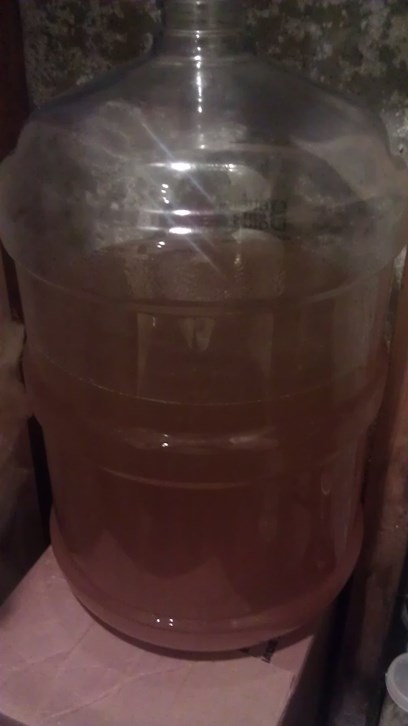
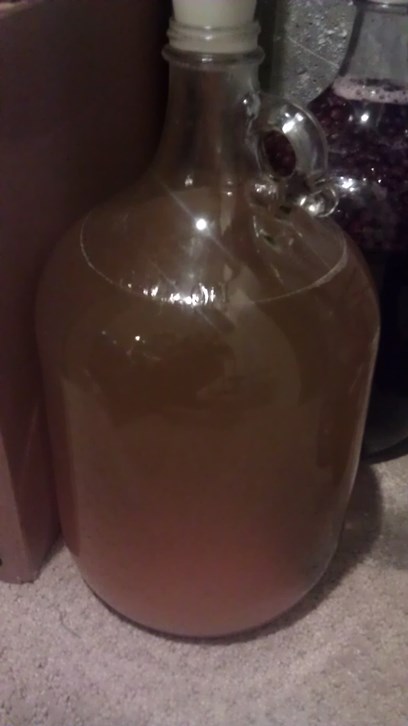
Clarifying Mead Making Mead Clear

The photos above are what my meads look like now. They are sort of hazy. To gather as much information as possible, I am going to use gelatin in one and bentonite in the other. Let’s see which agent is better at making particles settle out of these meads.

I plan to add the agents to these meads this weekend and then report on the findings.

Here are the results of the experiment.

Digital Johnson Temperature Controller

The most important thing you can do for your homebrewing is temperature control. After you have mastered the basics of sanitation and wort making, extract OR all grain, your fermentation process is going to give you the most bang for your buck on the road to making better beer. Yeast starters and yeast health are part of it, but in this post and video we are focused on temperature control.

The Digital Johnson Temperature Controller (model A419) is very popular among homebrewers. You can find them for $50-$70 bucks at most retailers. Running one of these in parallel with a fridge/freezer or with a heater like the FermWrap gives you control over ambient temps during your fermentation.

In this video, we break down the process of setting your controller to either heating or cooling by swapping the jumpers inside the unit. For everyone that is timid about electronics, or manipulating expensive and complicated pieces of equipment; we break it down into short easy steps.

As a precaution, be sure that you completely unplug the unit before attempting to open up the unit and play with the jumpers. Be gentle with those jump pins. We take no responsibility for you fumbling around in there with fat fingers and breaking something. Get the neighbors kid to do it if you must!

Cheers. BREW ON!

Sorachi Ace Wheat Beer Recipe

Great summer time beer recipe that mashes up the refreshing tastes of lemon and wheat in a beer. This beer is an update of my summer ale that I brewed before. If you are wondering what Sorachi Ace hops can bring to a beer, this recipe is a good entry level introduction to the lemony hop variety.

I plan to brew this beer this weekend and I will update the post with links to the brew day.

Boil size: 7 gallons
Final batch size: 5.5 gallons
Volume for fermentation: 5 gallons

Ingredients:

5 lbs 2-Row Malt
5 lbs White Wheat
1 lbs Pilsner Malt
.25 oz Sorachi Ace Pellets 12.85 %AA boiled 60 mins.
.25 oz Sorachi Ace Pellets 12.85 %AA boiled 15 mins.
.25 oz Sorachi Ace Pellets 12.85 %AA boiled 1 mins.
.25 oz Sorachi Ace Pellets 12.85 %AA boiled dry hopped
Yeast: White Labs WLP001 California Ale or White Labe WLP029 Kolsch yeast

Instructions:
Mash all malt and malted wheat at 152°F for 60 minutes and collect enough wort for a seven gallon boil. Boil for 60 minutes and add hops at specified times. Chill wort to 65° F and ferment for 2 weeks.
At the end of two weeks, rack the beer into a clean, sanitized carboy with last bit of hops. Leave the beer on the pellets for 3 days and then bottle or keg as necessary.

Predictions:

Original Gravity: 1.052
Terminal Gravity: 1.011
Color: 4.05 °SRM
Bitterness: 19.0 IBU
Alcohol (%volume): 5.3 %

This beer won’t be a hop heads’ dream. The American wheat style isn’t supposed to be too hoppy so I have developed this recipe based on the style guidelines. My first thought was to add some lemon zest to this beer. I had the thought of zesting one lemon and adding it to the secondary along with the dry hops. I may still do that but just split the batch in half. I still want to get the know Sorachi Ace hops without anything else getting the way.

Watch a video to see how this beer turned out

Aurora Hops

Aurora hops are also known as Super Stryrian hops and also known as Stryrian Aurora hops. They appear to be one variety of four that were Slovenian bred higher alpha acid varieties. In the early 1970s, Dr. Tone Wagner crossed Northern Brewer hops with a wild male variety that grew near the Hop Research Institute in Zalec, Yugoslavia.  Although it carries the moniker of Super Stryrian, it does not share heritage of the other well-known  Slovenian hop Stryrian Goldings.

There are some conflicting reports on their aroma.  Some sources stated that they were similar to Styrian while others claimed it was a common misperception and the name association is based on the hops’ origin rather than its flavor or aroma properties.

This writer is also confused by the name Aurora.  I don’t have the story of why they decided to choose that name to identify this variety since it doesn’t seem to have an attachment to its Slavic roots but rather a city in Illinois.

It’s all marketing to me.  Here are the stats for Aurora hops:

Origin: Slovenia (formerly Yugoslavia)

Aroma/Flavor:  Like Northern Brewer, which I would define as woody.  Most sources said pleasant and hoppy.  There weren’t many good descriptions but I would think there would be a nice earthy spice to these hops.

Alpha Acid: 7 – 9%

Typical Usage: Dual Purpose.  You could use this variety throughout the boil and it would probably play well with other hops.

Beer Styles: American, Belgian and dark English ales.

I could see you using these hops in recipes that call for Northern Brewer – maybe a California Common beer – to put a different spin on that style.  I think Aurora hops would be good to use in beers that use Saaz for aroma to give them a little punch of hoppiness.

Mayflower Brewing Company brewed a limited batch using just Styrian Aurora hops. I would describe the taste as a little floral with some earthy tones in there as well.

Page 166 of 322

Powered by WordPress & Theme by Anders Norén