Brew Dudes

Homebrewing Blog and Resource

The hobby of homebrewing beer

Homebrew Water Testing

Have you heard of Ward Labs in Nebraska?

Ward Labs is an industry leader in water testing.  Specializing in characterizing the mineral content and contamination profiles of water and soil samples for the agricultural business, they’ve expanded their business to help out Homebrewers.

When you read in How to Brew by John Palmer about all how much alkalinity, magnesium, calcium, sulfates, etc. etc. should be in your brewing water, it gets dizzying to me.  I have a decent background in chemistry, but water chemisty is a very special beast.

The cool thing about Ward Labs is that the will take a sample and quantify all the important minerals that Palmer preaches about.  I have had very little luck getting that information directly from my municipal water department.  Often municipal water departments focus on things like poisons and toxins in the water (lead and carcninogens).  Furthermore, my water department just offers a generic read out taken at one time a year.  If your water source tends to vary slightly season to season, the profile could be different.

I am pretty sure we have fairly soft water here in Northeastern Massachusetts…but how soft?

In a recent post about a bohemian pilsner recipe John hinted at our growing interest in how our brewing water looks.  That’s where Ward Labs comes in.

For a fee of $33, Ward Labs offers a Hombrewers Water Test.  They claim to return the complete analysis by 5PM the day after they receive your sample.

I think I’ll be getting the supplies together to mail out a water sample to help us get ready for our lager sessions this summer.

BREW ON!
Growing Hops At Home

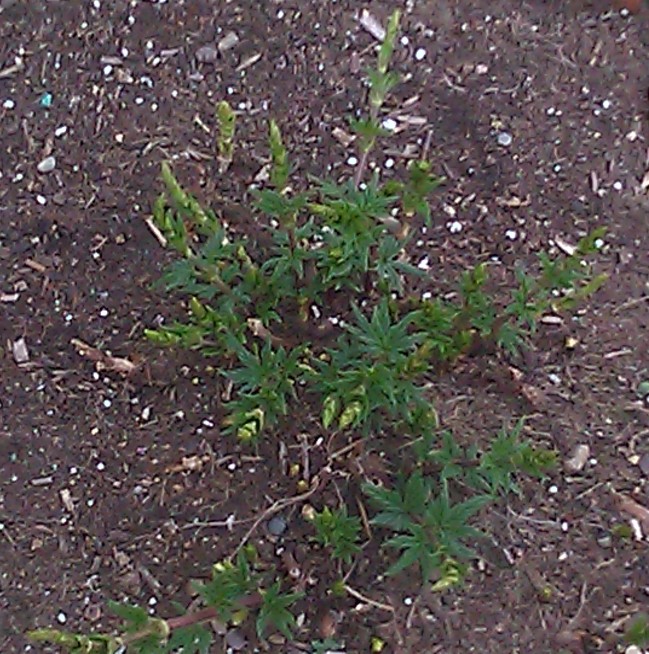
Spring has sprung and the hops have started to shoot out of the ground.

Hops Shoots

This year is the celebrated “Year 3” of my hop growing. All the resources that I read talked about the third year being a magical year of crop bounty. The root system should be fully formed and the bines should be primed to produce a good amount of hop flowers.

I had a good harvest last year. My goal is to get a pound of hops from this bad boy. Maybe this will be the year.

To help my efforts, I bought two more rhizomes to plant this year. If I am lucky, I will have Cascade and Willamette hops to harvest too.

Bohemian Pilsner Recipe

For this year, we set a goal to become master of lagers. To start moving towards this goal, we need plan to brew lagers. The first lager we are going to brew is this one – so here is the Bohemian Pilsner recipe:

Recipe Type: All Grain
Batch Size: 5 Gallons
Boil Size: 6.5 Gallons
Boil Time: 90 Minutes
Mash Efficiency: 72%

Ingredients:

10 lbs Pilsner Malt
.75 lbs Dextrine Malt
1.5 oz Saaz Hops (3.5 %AA) boiled 60 mins.
1 oz Saaz Hops (3.5 %AA) boiled 30 mins.
1 oz Saaz Hops (3.5 %AA) boiled 10 mins.
1 oz Saaz Hops (3.5 %AA) boiled 0 mins.
Yeast: White Labs WLP800 Pilsner Lager

Predictions:

Original Gravity: 1.054
Terminal Gravity: 1.016
Color: 4.22 °SRM
Bitterness: 39.6 IBU
Alcohol (%volume): 5.0 %

Notes:

To get better at making lagers, we’ve pinpointed two areas for improvement. The first area is yeast management. I plan to make a large starter for this beer. Basically, I am going to make a 3 gallon beer using malt extract and a little hops and let the yeast do its thing in the fermenter. I might even brew a second starter beer just to get the yeast to a point where they will do the best job possible for the Bohemian Pilsner. The plan is to siphon the starter beer off the yeast cake and then pour the pilsner wort right on top of it.

The second area is water. I plan to use a good proportion of distilled water for this recipe – at least 50 percent will be distilled and the rest will be filtered water from my tap.

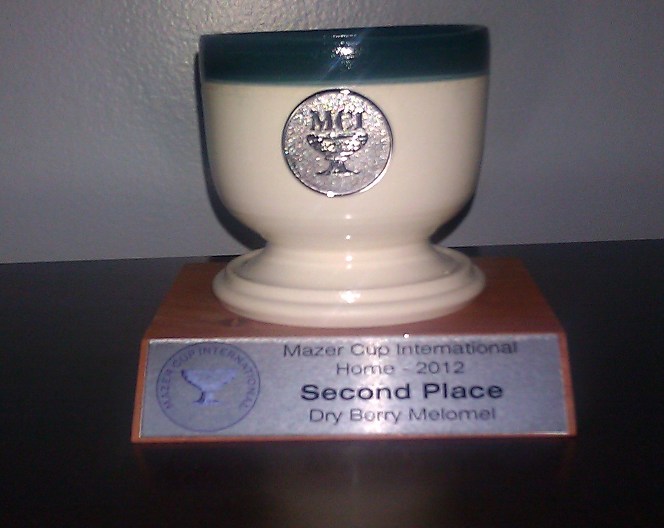
2012 Mazer Cup Award

With a lot of beginner’s luck, my raspberry mead places in the 2012 Mazer Cup’s Dry Melomel category.

Mazer Cup Award

Not bad for a first try. If you want to follow along, take a look at the posts leading up to this one.

Raspberry Melomel Recipe

First Time Mead Making

Raspberry Mead Update

Mead Bottling

Top Cropping Yeast Strain

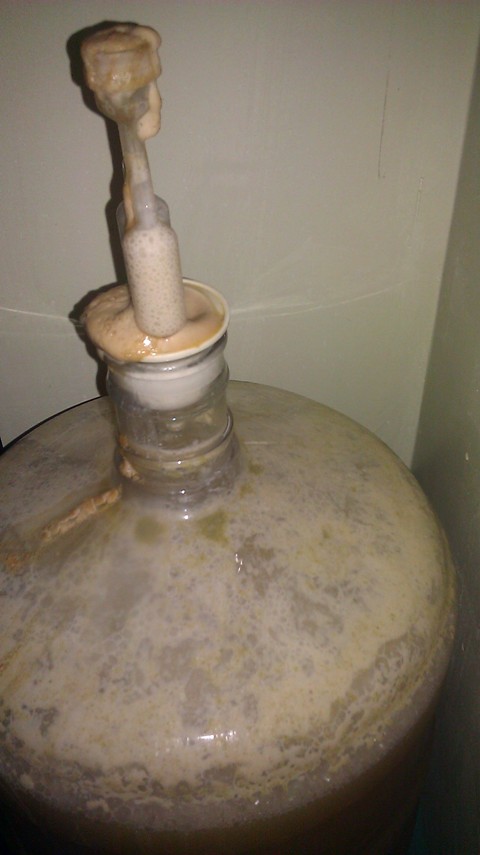
You know you have a yeast strain that was made for top cropping (for the record: Wyeast 3944) when you ferment it at the low end of its optimum temperature range and it still makes a foamy, yeasty mess.

Belgian White Ale Yeast

Next time I will try to harvest this overflow but this time I just have some cleaning to do.

I read that I should swirl the carboy around to get the yeast foam back into the beer so it will speed up the fermentation time.

If you have any other tips, leave them as a comment.

Page 192 of 322

Powered by WordPress & Theme by Anders Norén