Brew Dudes

Homebrewing Blog and Resource

The hobby of homebrewing beer

American Craft Beer Fest

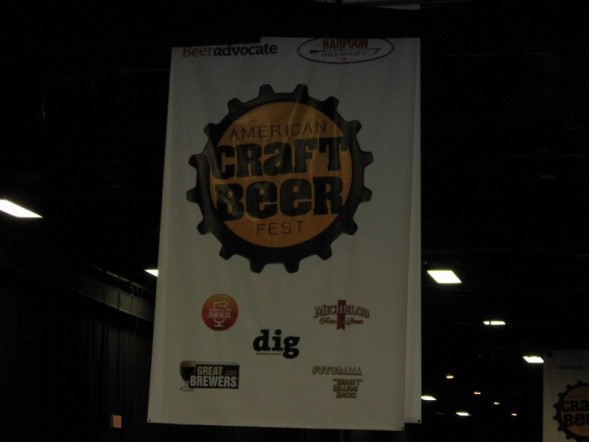
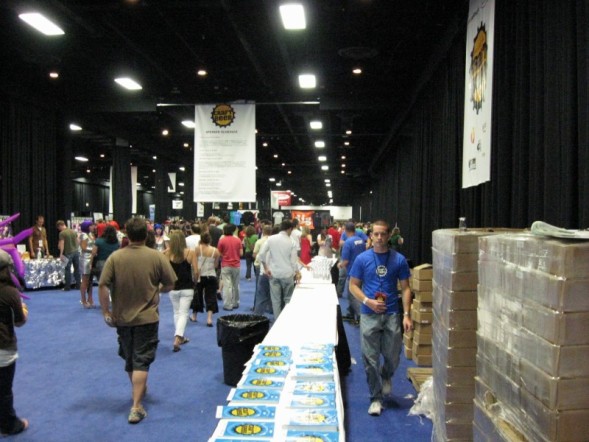
The gang attended the American Craft Beer Fest and enjoyed what we expect to be the first annual great, East Coast brew festival. It was held at Seaport World Trade Center in Boston, MA.

Here are some photos:
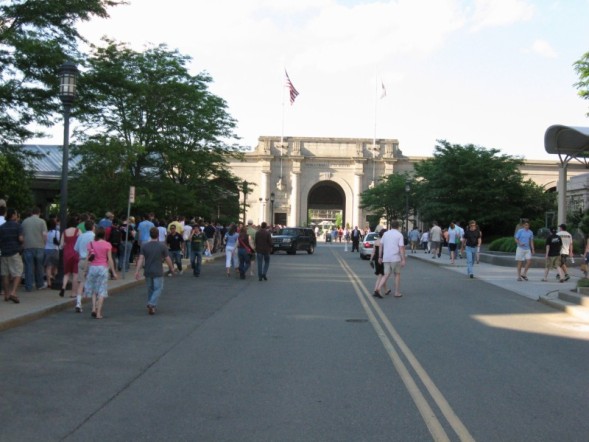
Seaport World Trade Center American Craft Beer Fest Sign American Craft Beer Fest Set Up

There were many great beers to be sampled at the American Craft Beer Fest, held by the great guys at BeerAdvocate. There were approximately 75 breweries representing coast to coast brews. I go to as many fests as I can and this one was one of the best. Here are my key highlights:

1. Pre-entry line was a bit odd at first, but once we were in it made total sense. They had ID checkers and “braceleteers” working from the front of the line to the back of the line while we waited. This made getting into the fest very quick once they opened the doors.
2. The first thing I noticed once we were in the convention center was a blast of cold air from the AC units. That was a very nice surprise, they seemed to have gotten the jump in the climate control, because all night long the air was warm but not annoyingly so. Other fests that I have been to indoors usually end up being a sweat-lodge by the time its over.
3. The center floor was carpeted. This was a total surprise. It really was nice on the feet and back after a while. Really helped to quiet things down some too I am sure. I’m glad I do not have to wash those carpets, but surprisingly I didn’t see too many beer stains in the carpet so maybe spillage was kept to a minimum.
4. The organizers had several “port-o-lets” to keep beer recycling time to a minimum. I am sure that “port-o-lets” are not everyone’s favorites, but it made life so easy and quick. I think it was a good set up.

The only real detractor was the food! The convention center in-house vendor must have exclusive rights to the food station by contract. Otherwise, I would have expected the normal top notch eats from Sunset Grille which is usually at the BA fests. (AND NO SUGAR HAUS WAFFLES!!!!)

Anyhow, who cares about that stuff…what about the beer?!? Well, I tried close to 20 different brews (not even 10% of the total, very sad). I actually kept score (sort of) and tabulated a list of the beers I had below. Surprisingly the best beers of the show for me were three sour beers. Two from the local Cambridge Brewing Company and one from Dogfish Head. These three beers were just great. Or at least the greatest beers of the bunch. Is there a sour beer in my future brewing??? Maybe. Last Summer I had a great Berliner Weisse at Boston Beer Works and I have thought about it ever since. I’ll have to do a little more research into the methods of souring a beer and see what I’d like to try out.

Here is my tally sheet of the beers I tried. I list the brewery, the beer name and a score based out of 5. I view a three as drinkable but not something I would seek out commercially. Granted a 2.0oz pour isn’t really a great way to get to know a beer. But I think my little score sheet has some nice trends to it. (I seem to have given the next best rankings to the few rye beers I tried).

I’d be interesting in comparing notes if anyone else was at the fest.

Brewery Beer Score (0-5)
     
Allagash Brewing Co. Allagash Black 3.5/4.0
Avery Brewing Co. Fifteen 3.5/4.0
Bear Republic Brewing Co. Hop Rod Rye 3.5/4.0
Boston Beer Co. Samual Adams Sahti 3.0
Brooklyn Brewery Brooklyner Keller Helles 3.5
Cambridge Brewing Co. Cerise Cassee 4.5
Cambridge Brewing Co. Kriek du Cambridge 4.0/4.5
Dogfish Head Festina Peche 4.5
Gardner Ale House Oma’s Altbier 4.1
Harpoon Brewery Leviathan Triticus 3.5/4.0
Harpoon Brewery Old Rusty’s Red Rye Ale 3.5/4.0
High & Mighty Brewing Co. Beer of the Gods 2.0 (weird aftertaste)
Lagunitas Brewing Co. Hop Stoopid 3.5
Lagunitas Brewing Co. Lucky13 3.5
Paper City Brewing Co. Paper City Radler 1.0
Southern Tier Brewing Co. Raspberry Porter 2.0 (good berry flavor, thin porter)
Stoudts Brewing Co. Stoudts Blonde Double Maibock 4.0
Terrapin Beer Co. Rye Pale Ale 3.5/4.0
The Duck-Rabbit Craft Brewery Duck-Rabbit Milk Stout 4.0

The Aleuminati

We love social networks and we just joined another one: 

The ALEuminati

It is the not so secret society of better beer drinkers.

Because of social networks like these, we might be able to drink beer with other people than just the regular ol’ gang. 

Not saying anything’s wrong with the good old gang…just saying anything that can bring more people closer can’t be a bad thing. 

Roasted Barley

With Mike constantly refining his Oatmeal Stout recipe, he came to a conclusion about Roasted Barley.  He feels that this ingredient should be the main contributor of the dark color and roasty flavor to his beer and that he should eliminate Black Patent Malt from his recipe.  

Note that I wrote “ingredient” and not malt…since Roasted Barley is not malt.  It’s unmalted barley and does not have enzymes that are in malt that convert starch to sugar.  It is roasted until it turns the targeted color…which I think is right before it turns to ash.

Flavor: Roasty (natch), Intensely bitter, coffee notes, dry

Color: I have seen a range of 300 to 660 (!) Lovibond.  I think I will stick with a tighter range of 350 – 400 L

Body: I don’t think it modifies a beer’s body in a significant way.

Use: Stouts, primarily dry stouts.  Used in small amounts, it will add complexity to porters, nut brown ale, and other dark beers.

Blueberry Ale Recipe

I reread Mike’s post on brewing fruit beers and I dreamt up this all grain blueberry ale recipe that balances sweet (from the malt), spicy (from the hops), and tart (from the berries) flavors into one beer. You’ll need a secondary fermentor for this recipe.

Ingredients:

8 lbs. American 2-row
0.25 lbs. Honey Malt
0.75 lbs. German Vienna Malt
0.50 oz. Perle (Pellets, 8.25 %AA) boiled 60 min.
0.50 oz. Saaz (Pellets, 5.00 %AA) boiled 15 min.
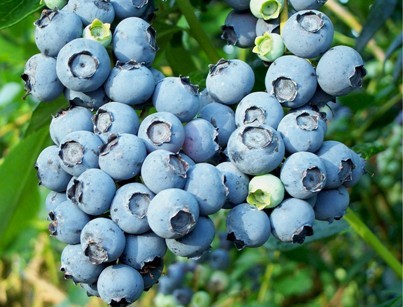
2.5 lbs. Oregon Fruit Puree – Blueberry
Yeast: White Labs WLP051 California Ale V

Instructions:

Mash grain at 150° F (66° C) for 1 hour. Boil for 60 minutes and ferment at 68°F (20° C) for 2 weeks. Add fruit puree to secondary fermenter and rack beer on top of it. Let beer condition for 1 week.  Prime and bottle or rack to a keg and force carbonate for another 2 weeks of conditioning.

Original Gravity: 1.047
Final Gravity: 1.010
Color: ~30 °SRM (Adjusted For Berry Color)
Bitterness: 21.5 IBU
Alcohol (%volume): 4.8 %


Blueberry Ale


Tasting Notes

January 17, 2017

I brewed this beer again last summer, 9 years after I formulated the recipe. Today I was asked if I could write up some tasting notes and maybe finally get to posting a photo of the beer. Hey, better late than never.

Thankfully, I had two bottles stashed away so I opened one up to do a proper review.

Blueberry Ale

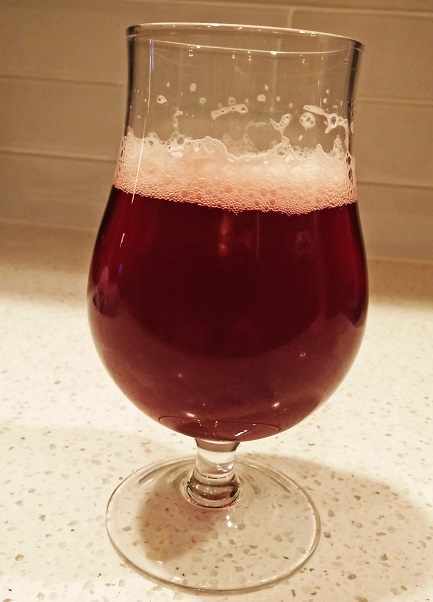
Appearance: As you can see, you can’t get away from the blueberry color in the beer. The first impression show a reddish-purple but with some amber highlights. The head is reddish-white with a good bubble structure.

Aroma: The aroma is very fruity, almost wine-like in its bouquet. It’s like a really floral honey. It’s reminiscent of lilacs – a real sweet smelling flower.

Taste: Big fruit right up front – a lot of real Maine blueberry flavors. It gives way to some caramel maltiness and then finishes with some pleasant hop bitterness.

Mouthfeel: I am surprised that the mouthfeel is medium since the aroma sets me up for a real thin beer. The malts bring the body and it brings the experience up a level.

Overall Impression: This is a real fruit ale. Your notions of fake blueberry flavors should be abandoned before you take a sip. What you are given instead is a great representation of the berry which is backed up with hops and malt in the aftertaste.

Brew on!

Magnum Hops

I have had my eye on Magnum hops since I brewed my APA.  That beer was an experiment in Glacier hops, which made a pleasant, balanced beer.  After tasting it, my thoughts turned to finding a good bittering hop to use for another APA trial.  After conducting research on Magnum hops, I think I might have found it.

Origin: Originally Germany.  From the sources I read, the Magnum hop variety was bred at the Hop Research Center at Hüll in Germany.  I think what we American homebrewers will find are US grown Magnum hops, which sometimes get the Yakima Magnum moniker.  It is derived from Galena, although there were some opposing views (Hallertau was also mentioned as a parent hop).

Aroma: Most sources had no real comments about this hop variety’s aroma, so I am thinking it has a nice, nobel aroma.  Pleasant, not pungent.

Alpha Acid: Between 12 and 14%

Typical Usage: That high alpha acid and lack of a strong aroma makes Magnum a great bittering hop.

Beer Styles: I would say good for Pales and IPAs.  Because of its heritage, and clean bittering power, it probably work for German lagers.

Page 292 of 322

Powered by WordPress & Theme by Anders Norén