Brew Dudes

Homebrewing Blog and Resource

The hobby of homebrewing beer

Racking Cider

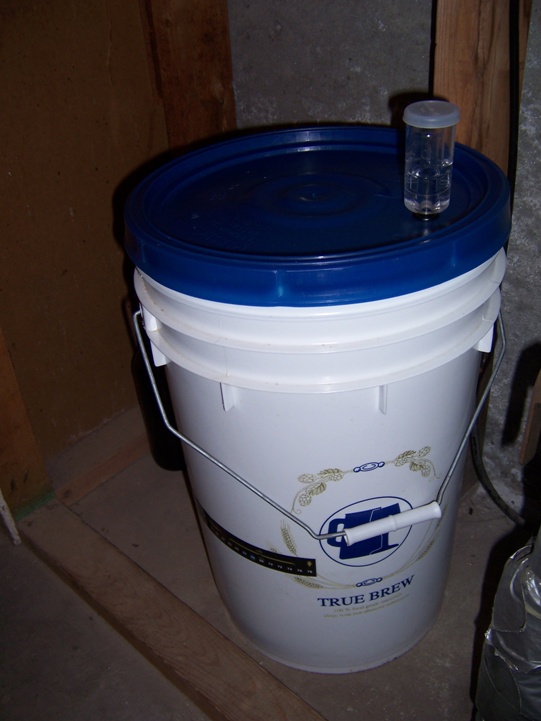
I racked the cider we pressed a couple of weeks ago from the primary fermenter to a secondary glass vessel.

Everything went well.  Since we only pressed about 3 gallons of cider and my vessel holds 5 gallons, I felt I needed to deal with the large head space between the cider and the fermentation lock.

I added just a little sugar (1/2 cup boiled in a cup of water for 15 mins) to the vessel before racking  for the yeast to chew on to build up some CO2 and force the air out.


There was one item of note during last night’s racking session. After I opened up the lid of my primary fermenter, I wanted to take a whiff of the cider to see how things were progressing.

I was knocked back two feet. There was so much acidic, nostril burning, carbon dioxide coming out of the top of the bucket that I jumped away from the fermenter.

It took me a while to get my sense of smell back. Ok, like 10 seconds but I had never encountered this phenomenon with beer. It’s been a much more pleasant experience.

I am pretty sure the peak of fermentation was over. It’s not like I took off the lid with the airlock a-clacking…

Not sure why I got this overpowering shot of CO2. Is it coming from the yeast strain (first time using champagne yeast)? Is this normal behavior of a fruit must (first time for that too)?

Maybe a combo of both.

Anyway, tasted the sample from my hydrometer tube (1.000 reading). Tasted good but young. There is a hint of the old press in the aftertaste. Yum?
Maibock Recipe

Since this lager style won in the lager poll, this is the update to Maibock Recipe post.   Here is my all grain recipe:

Ingredients

10.5 lbs. Pilsen Malt
5.5 lbs. Munich 10L
.75 oz. Northern Brewer Pellets, 8.5 %AA boiled 60 min.
Yeast: White Labs WLP830 German Lager Yeast

Predictions

Original Gravity: 1.070
Terminal Gravity: 1.017
Color: 9.96 °SRM
Bitterness: 26.5 IBUs
Alcohol (%volume): 7.2%

Made a 7 liter yeast starter with 2 tubes of the WLP830.

Ferment at 50° F for at least 2 weeks.  Lager for at least 4 weeks.


Here is my extract Maibock recipe:

Ingredients

8.5 lbs. light malt extract
0.75 lb. Munich malt
1 lb. cara-pils malt
0.75 lb. crystal malt, 60° Lovibond
1 oz. Hallertauer hops for 60 min.
0.5 oz. Hallertauer hops for 30 min.
1 oz. Saaz hops at end of boil
WLP833 German Bock Lager Yeast
2/3 cup corn sugar for priming

Step By Step

Crush crystal and cara-pils malt and put in grain bag. Steep grains for 60 minutes at 150F in the volume of water your pot can handle for brewing. Remove grain bag and add liquor to brew pot…if it’s not in your brew pot already. Bring liquor to a boil. Add first Hallertaur hops portion and light malt extract. Boil for 60 minutes, adding hops on schedule indicated above.

Cool to fermentation temperature and add yeast. Ferment at temperatures as directed on the yeast vial. Final gravity should be 1.008. Move beer to secondary vessel and condition for up to two weeks. Prime and bottle condition for up to two months.

Get started now and it will be ready for April.

Maibock

Infected Beer

Oktoberfest Disaster Continued!

UPDATE 10/20/09

Well after tasting the beer it is definitely infected.  The flavor was somewhat clove phenol like, it wasn’t strong but it wasn’t pleasant either. There was decidedly something musty in the background as well.
I am not a big believer in letting something like this go, and “pretend” its Belgian-like in quality.  The beer has taken a turn towards what I didn’t intend so I dumped it out.  There are always new brew days to come.  Perhaps this was a lesson learned from the poor yeast start as well.  Anyhow, I will work on another lager soon.
In the meantime, I also transferred and sampled my Brown Porter and Cider.  Both of these were excellent and are now in kegs.  I am still reeling from the loss of the Oktoberfest, but at least I have some fresh brews to drink to drown the sorrows.

Here are a few photos of the transfer night and the infected brew.

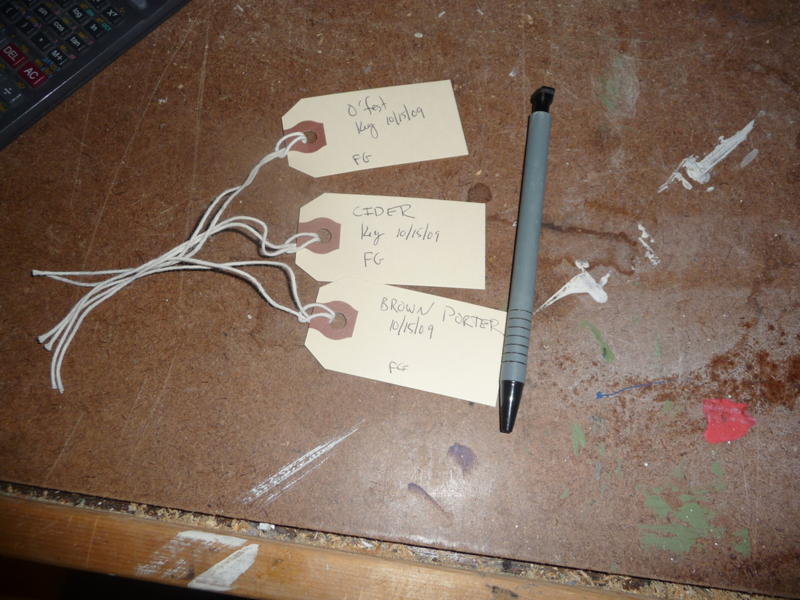
Some keg tags prepared with wishful thinking.

keg tags

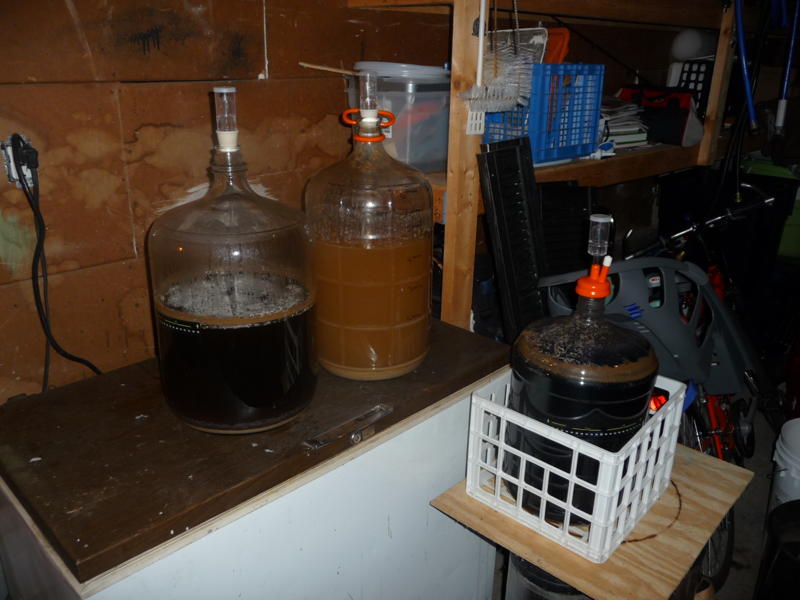
The three carboys are in position to get transferred to kegs:
O’fest, Cider, Brown Porter (L-R)

three brews

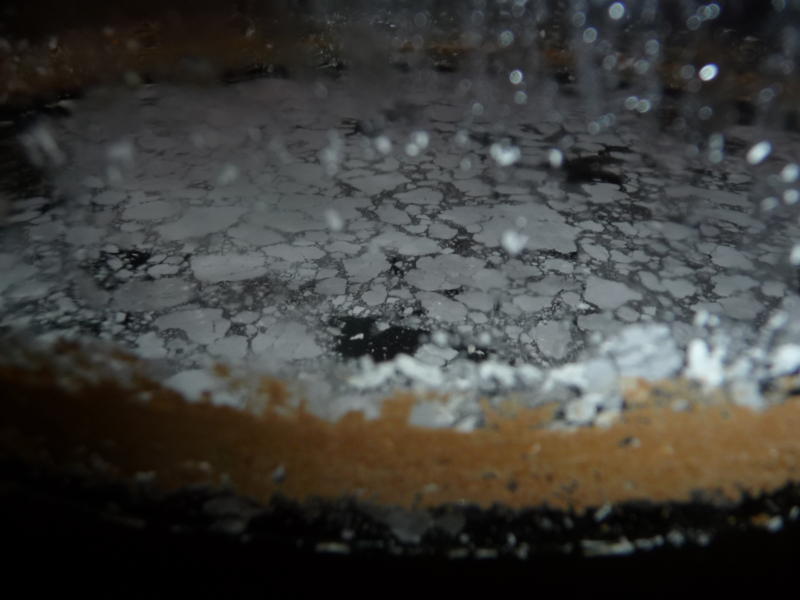
The scaley infection in the O’fest.

infected ofest

Close up of the infection.

infection closeup

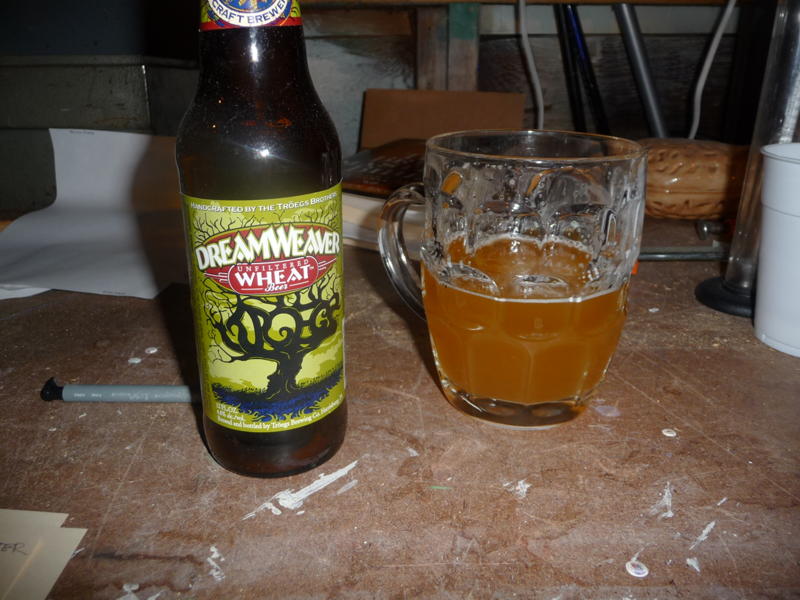
Drowing my sorrows with a Troegs DreamWeaver Wheat.

Troegs dreamweaver wheat

Original Post 10/15/09

Unless someone can tell me other-wise, I suspect my Ofest is infected.

There are white scale-like patches completely covering the surface of the beer.  I had the beer at 68F for the last several days, hoping to dry it out some before committing it to the lager process.  I took a sniff of it, but it didn’t smell funky.

I didn’t get a chance to taste it, because I didn’t have the time to clean and sanitize some tubing to pull a sample.  I have never brewed with Wyeast 2308 (Munich Lager) before, so maybe this is just a late stage effect from the yeast.  My next guess is that it may actually be some lipids from autolyze yeast cells…. but that’s just a guess from my lab experience with seeing lipids in weakly organic solutions at work.  Of course, that wouldn’t be any better due to the nasty flavors you get from autolysis.

Well, I am going to give it a taste tonight and see whats going on… but I don’t have high hopes.

In my eleven years of brewing, I have only had 2-3 contaminations happen.  I can only imagine where the contamination came from here.

I’ll try and get a picture tonight to add to this post later as a follow up.

Bummer!

Maibock Style Profile

Not to influence the voting on an open poll, but it appears that I am going to be brewing up a Maibock next month….which is fine by me.  I think it will appropriate for the seasons.

Brew in the late Fall.

Let it lager in the Winter.

Enjoy it in the Spring.

After doing some more reading into the style, I thought I would share my findings:

  • As with other Bocks, the flavor emphasis is on the malt.
  • Noble hops are to be used
  • The color of Maibocks ranges from deep gold to light amber.  I had it in my head that they would be a little darker.  I was mistaken.
  • Lager yeast needed (natch) but one that leaves a clean flavor profile
  • No Diacetyl

I guess there is some jovial argument about the differences between a Maibock and a Helles Bock.  Maibocks could be considered a fest beer since it is associated with May and Spring and such, so one could get away with making it a little stronger, darker, hoppier…

One should use European continental malts for a Maibock.  I plan have a base of Pils malt along with a little bit of Munich malt for flavor.

The style also calls for a decoction mash.  I wonder if I can do that as a batch sparger?

I have a Maibock Recipe here but it calls for extract.  I need to create an all grain version of it and update this post.

Making Hard Cider

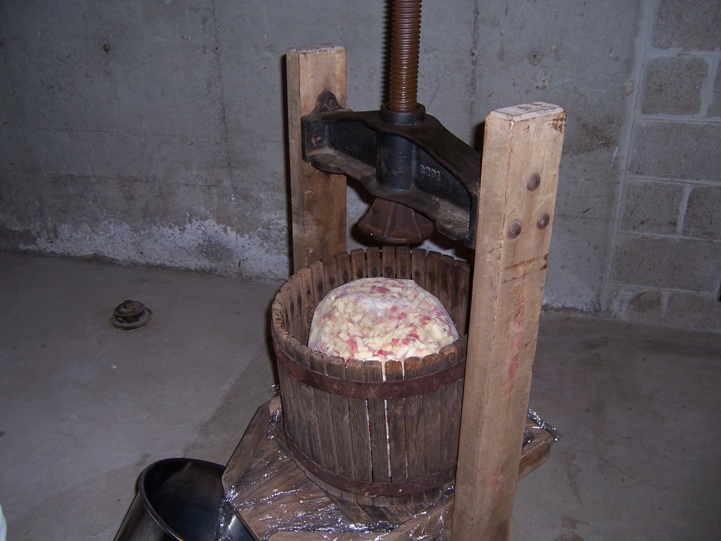
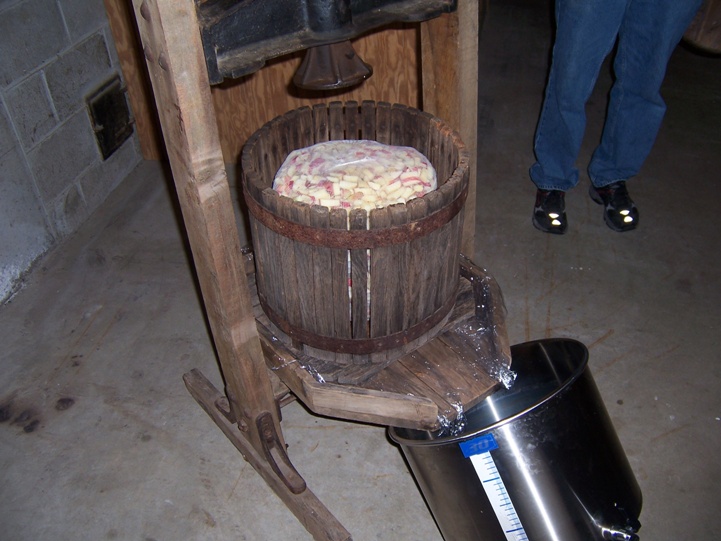
On Saturday afternoon, we put the old apple press to work.

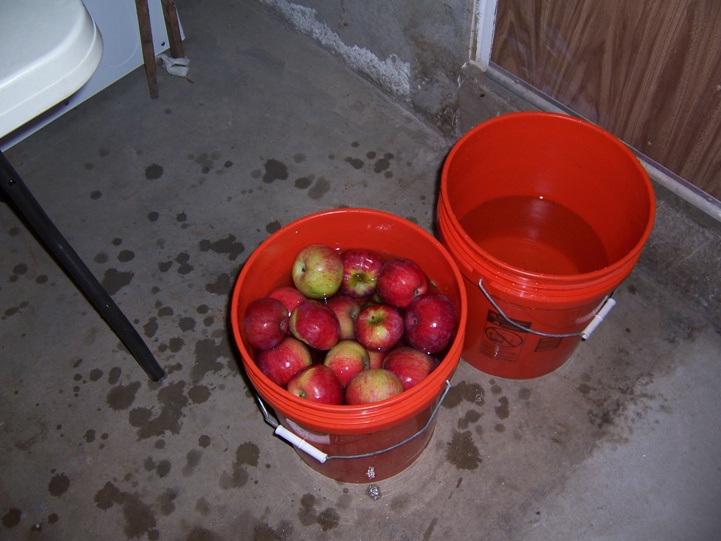
Our target was 3 gallons of cider for this first attempt.  I read somewhere online that one would need 12.5 lbs of apples to make 1 gallon of cider.  We picked about 40 pounds from the orchard down the street and felt like we had enough.

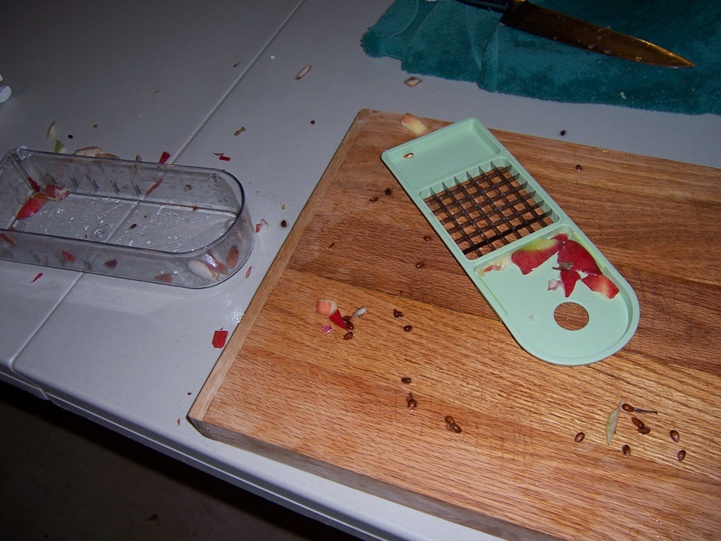
We started chopping the apples in half and then french fry cutting the halves to get them ready for the press.

After pressing with all our might, we learned that the apples needed to be processed even further to get more juice.

We employed a 3 three pronged attack (food processor, stick blender, and regular blender) to prep the apples for more productive pressing!

The regular blender didn’t work all that well, so we stuck with the food processor and the stick blender.  We turned the 40 lbs of apple fries into mush in no time.

We put them all back into the press and watched the huge flow of cider spill down into the kettle.

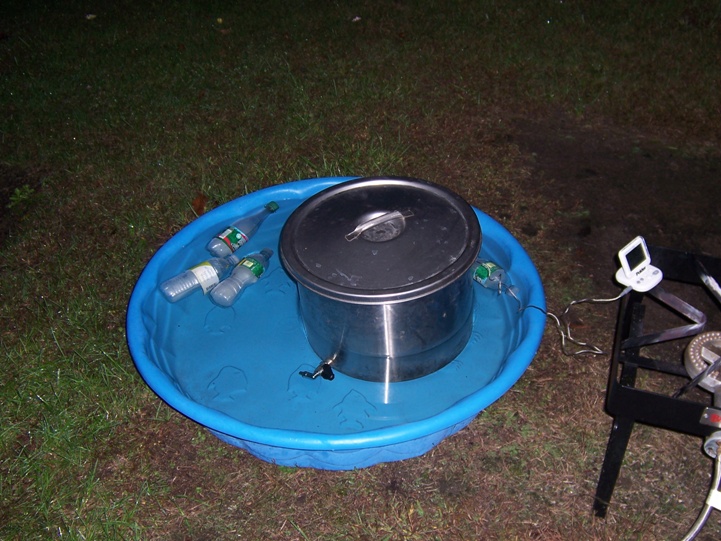
I added 2 cups of sugar to the cider and pasteurized it by heating it to 170°F for 20 minutes.  We felt it was our best option to kill any unwanted critters.

We cooled it in a kiddie pool ice bath, added some pectic enzyme, some yeast nutrient, and two packages of proofed Champagne yeast.

Sunday morning, it was fermenting like crazy.  We’ll see how it turns out.

Lessons Learned:

Need an apple grinder or some kind of way to mill apples into a nice mush quickly and easily.

Need to fix the bottom of the old press.  There are a few leaks – we had a temporary fix with plastic wrap…but that’s not ideal.

We were only able to press 2.75 gallons of cider.  We may have a larger yield next time, but maybe we should pick a few more pounds of apples.

Some photos:

Making Apple Cider Apples for Hard Cider Apple Cider Press

Making Hard Apple Cider Chilling in a kiddie pool Fermenting Cider

Page 250 of 322

Powered by WordPress & Theme by Anders Norén