
Brew Dudes

Homebrewing Blog and Resource

The hobby of homebrewing beer

120°L Caramel Malt

I am starting up a new category around brewing ingredients. When I search for information about particular grains or hops, I find that many sites provide the same details about the particular ingredient I am researching. What I thought I could do is start creating posts about ingredients that provide comprehensive information collected from multiple sources. The first ingredient to be showcased is 120°L Caramel Malt.
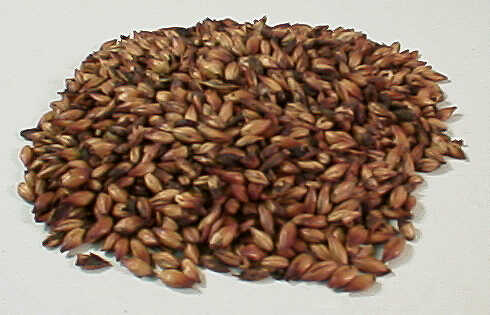
120L Caramel Malt

Look at the colors! Light brown to brick red!

Flavor: It provides a complex malt profile to your beer. Some of the things I read included…

  • Pronounced sharp caramel taste and sweetness
  • Toffee
  • Burnt Sugar
  • Raisin
  • Prunes

Color: It will provide a deep red color. I found this distinction interesting…not brown, but deep red.

Body: Since it contributes plenty of non-fermentables, it will increase body and mouthfeel and aid foam retention and beer stability.

Use: Adding 120°L Caramel Malt to recipe (up to 15 percent of your total grain bill) will add bittersweet caramel flavor and aroma to beers. Adding more would be well suited for strong beers such as Barley Wines and Old Ales.

Hopefully this post gives you more information about this type of malt. If I find more information, I will update the post.

Racking Cane Replacement Project

I use an autosiphon to rack my finished beer from fermentor to keg. I can’t stand it sometimes because it seems to pull too much air between the cane and the outer housing (if you have ever seen one of these you know what I mean). I also don’t like that there is twice the amount of plastic to clean and sanitize with an autosiphon compared to the traditional cane and tubing setup. A conical fermentor would be great, but I can’t afford one just yet. Then I thought of a similar cheap alternative that I may try.

I ferment almost exclusively in buckets these days (yes I used to do swear by the glass carboy thing, but then switched. Topic for another post). I was thinking of installing a spigot, much like the one found on a bottling bucket, in my primary fermentor. However, instead of putting it on the bottom of the bucket I would install it an inch or two above the base of the bucket at a height that would be above the normal yeast cake. Then all I would have to do would be to loosen the lid, sanitize some tubing for the spigot, then let it flow into my keg (or mouth; whatever is handy at that moment).

A second modification I could envision would be to attach a 90 degree elbow to the spigot inside the bucket. The I would rotate the elbow so the opening faced down during the ferment, and I could turn the opening up or to the side, when I wanted to “rack”. That might limit even more yeast from coming through the valve into the keg (or mouth, see above paragraph).

I realize that this “gadget” may not be original, because I vaguely remember seeing something like this in BYO magazine.

If anyone recalls that article and can past a link to it or has the issue information, that would be great.

Amylase in the Mash

I was doing some random reading about mash enzymes and realized I had the wrong impression about which enzyme did what during conversion. I had my thoughts backwards about alpha- and beta- amylase. So I’m posting my new found knowledge here:

Beta-amylase– only cleaves starch chains from the ends resulting the disaccharide maltose (2 glucoses). Optimum temp is 140-148F
Alpha-amylase– preferentially cleaves the brach points of starch molecules leaving unbranched chains, can also cleave the chain ends to generate maltose. Optimum temp is 158F-ish.

When we mash at 154 we get a good mix of both beta- and alpha-amylase activity. That “cooperativity” leads to a very fast conversion. Next time you do a single 154F mash, get some iodine and start testing it every 5 minutes. Seeing as it only costs a few drops of wort, it’s not a big deal. From what I have read within 20 minutes or so you’ll be probably be done converting. (I may have to try this at some point and report back as an experiment) The longer mash time just leads to a drier and drier wort. (FWIW, I still do 60 minute mashes. Although I did my ESB with a 40 minute 154F rest and it seemed fine).

Remember too that alpha-amylase (158F optimum temp), can also cleave the ends not just the branches. So you can get a very fermentable wort by mashing at 158F. It just takes a lot longer time. If you have ever heard of people doing overnight mashes, that is what they are doing. Essentially degrading all the beta with a 158 mash in, then its just alpha slowly working on all the branched then unbranched starches (amylose).
I think that is how things like Mich Ultra is made, long high temp mashes.

ESB Tasting Notes

I brewed up an ESB a month ago. Last night we had a little family shindig at our place and I tapped into the keg. Served up 5 pitchers of this beer and everyone was really satisfied with the taste.

My impressions were satisfactory. I was really experimenting with this recipe and trying to shoot for something that was very malty and bready in flavor. My initial tasting of the beer made me think of soft pretzels like you get in the mall or at the fair. So I think my breadiness was on the money. The hop bitterness was a little weak but the hop flavor was good. Maybe I’d try a stronger bittering hop next time, I’ll have to research that.

The beer was for the most part clear, with minor haze to it. If I let it cold condition longer I could rack it over to another keg and probably have a crystal clear product. But I don’t think it will last that long.

I missed my terminal gravity though. I ended with a FG of 1.020! I thought it would taste sweet but it wasn’t bad. Probably right at the threshold of sweetness/dryness for my palate. I know what the problem was. It started fermenting at about 72F. That is a little worrisome of a temp for me as I usually ferment at 68F. However, the outside temps are not all that stable right now so my beer fridge doesn’t come in handy to hold a 68F ferment. So I had the fermentor in the basement of the house. I moved it from the 72F room and put it in a cooler corner of the basement. It drifted down to about 65F and continued to ferment. I think the yeast probably crapped out and went dormant before they were done. This is further supported by the presence of a slight diacetyl note in the beer; at least more than I am used to. Next time I should just let it run the course at 72 and see if that produces too many esters for my taste preference.

Regardless, it was a good beer. I think I have a third of a keg left. Maybe I’ll bottle some of it up and send it to a new comp. I think I missed the deadline for the December 1st competition. I’ll think about tweaking the recipe a bit and rebrew it in the future. Stay tuned!

NERHBC Scoresheet Review

Hey. I am updating this post from last Friday.

I got my NERHBC scoresheets in the mail. I got low marks for my submission to the specialty beer category because my ‘specialty ingredient’ was not specified on my entry.

I remember submitting ‘maple syrup’ as the specialty ingredient when I filled out the online form.

I guess I feel a bit frustrated that my maple porter wasn’t given a thorough review because of this supposed omission. Oh well, better luck next time.  I think I will write to the organizers just to figure out what happened or what I can do next time to make sure I submit my entries correctly.

For my submission to the Porter category, here is a synopsis of the comments:

Aroma: Dark ripe fruits,  toffee, alcohol

Appearance:  Brown to Black,  Off white and persistent head retention.

Flavor: BIG, Well attenuated, Sweet Start, Complex malt flavor, Finishes somewhat cloying.

Mouthfeel: Medium carbonation ok

Overall Impression: Good example of a baltic porter…one judge thought the overall sweetness detracted from the enjoyment of the beer.

My final assigned score was 33 out of 50…which places it in the “very good” beer range.  The ranges “Outstanding” (45-50) and “Excellent” (38-44) being above that.

The whole competition experience has been a lot of fun.  It was fascinating to read the judges comments.  I planned to retool this recipe anyway.  I will update the Maple Porter Recipe before I brew it again.

Page 309 of 322

Powered by WordPress & Theme by Anders Norén