Brew Dudes

Homebrewing Blog and Resource

The hobby of homebrewing beer

Brew Session Halted

The subtitle of this post should be – always take inventory of your brewing supplies (all of them) before you brew.

I got up early in the morning to get the kettle going.  At 20°F and the wind blowing gusts of 30MPH, it’s a bit challenging.

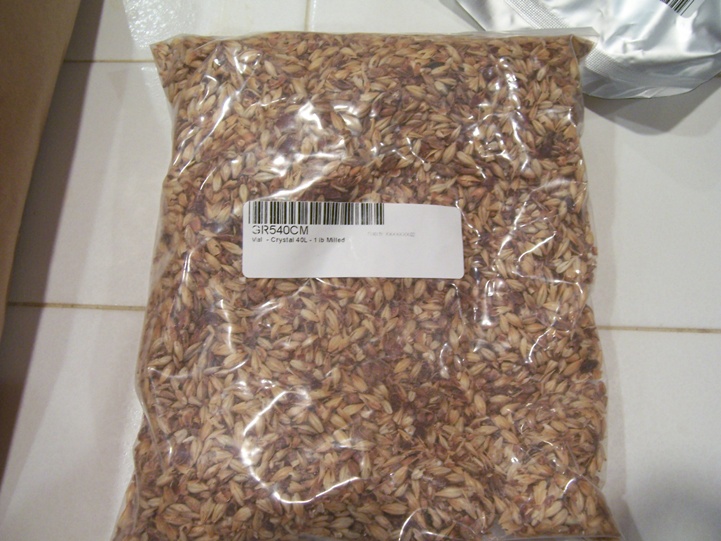
I got my yeast starter out and I started to gather my grains for mashing.  I found my caramel malt was nicely milled…

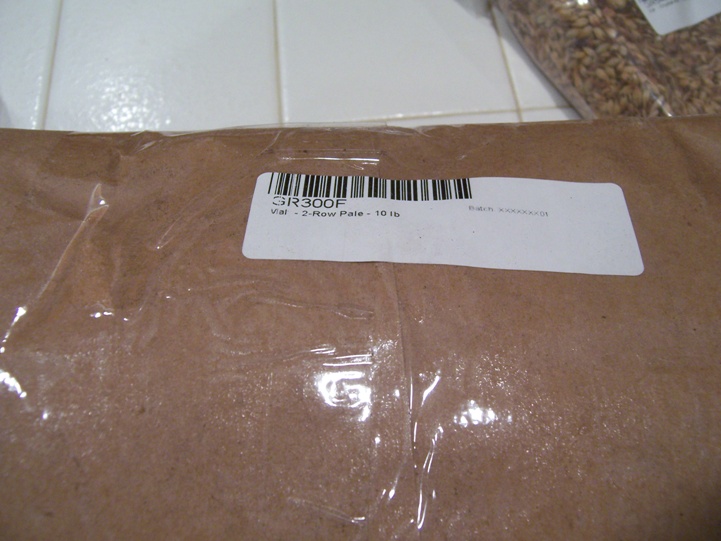
Unfortunately, the 10 pounds of 2 row were not.  Staring at the bag, I wondered if I had ordered milled 2 row malt or not.  I checked my order sheet and my online account and saw that I had made a mistake.

Defeated, I packed everything away and went back to bed.

So, what did we learn here?

1. Always check everything you ordered before you schedule your brew date.  I have done this in the past, but I was lazy this time around.

2. I need to buy a grain mill.

3. Make sure you have a good friend that brews as well to help you through issues like these.

Thankfully, Mike has a mill and I can grind up the malt at his house.  So embarrassed.
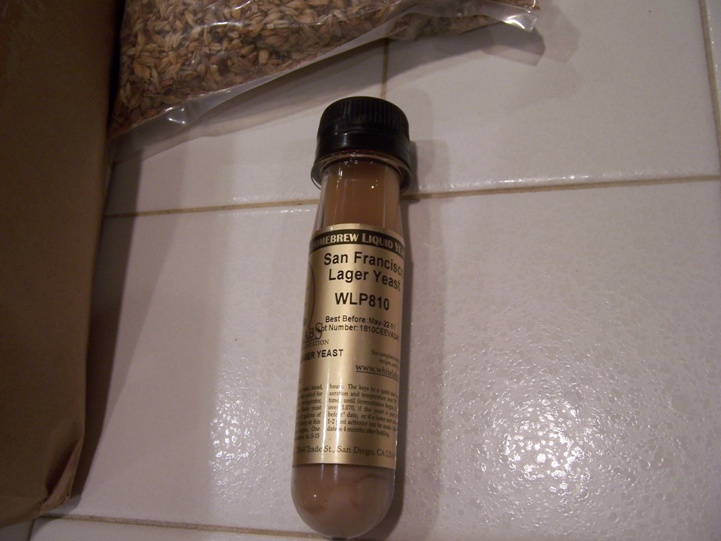
WLP810 San Francisco Lager Yeast

Who was up at 5AM this morning making a yeast starter? Well, I was. I am pretty excited to be using the WLP810 San Francisco Lager yeast strain. I made a 5 liter starter with 500g of dried malt extract to have enough healthy yeast to plow through the California Common beer that I have planned to brew up this weekend.

For a hybrid beer, I was under the notion that this strain would be some kind of hybrid as well. It’s actually a lager strain that performs well at higher temperatures than the typical lager temperature range.

It is given a high rating for flocculation so I wasn’t surprised at how it was sticking to the sides of the vial. I had to give it a good shake a few times to get the yeast moving.

The fermentation temps for this strain are between 58° and 65°F, so my basement will be fine for the primary fermentation. I may get the heating pad out to see if I can maintain the temperature at 62°F.

California Common Beer Ingredients

Kicking off another brew log – Let’s get the Cali Common going.

I got all the ingredients and some new equipment for the next brew session.   I have been working on the perfect place in the basement for fermenting this odd hybrid beer.

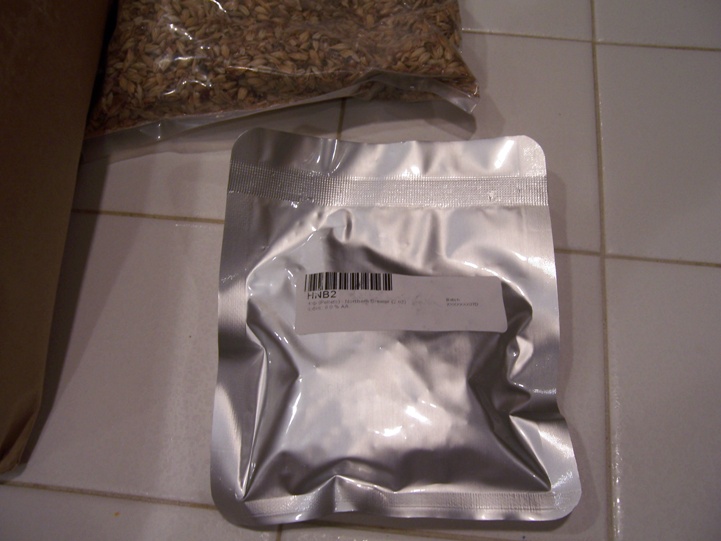
Here are some photos of the ingredients:

40L Caramel Malt   10 lbs. 2-row malt   Northern Brewer Hops   San Francisco Lager

We had a whole bunch of Anchor Steam at a party last weekend so I am getting ready to brew this one.  This will be the first beer where I get to use my aquarium pump to aerate the wort.  We’ll see if it has a major effect.

Fermenter vs. Fermentor

I just got Yeast: The Practical Guide to Beer Fermentation in the mail this week and I have been reading it on the train to and from work.  Within the first the few pages, I learned something new.

The difference between the word “fermentor” and “fermenter”.

Although it seems they can be used interchangeably, the two words have two different meanings.

Fermentor is the vessel where fermentation happens.

Fermenter is the creature that does the fermentation.

I think I have a few spelling errors to change on the blog.

Now that you know the difference between fermentor and fermenter, check out these posts:

Everything you wanted to know about primary fermentation.

Become an expert on secondary fermentation

Nelson Sauvin Hops

Another NZ hop variety that I have come across. Here is our profile for Nelson Sauvin Hops.

This variety was developed by HortResearch at their location in the city of Nelson, which probably attributed to its namesake. It’s a cross between the New Zealand hop variety known as Smooth Cone (which is not grown commercially anymore) and a New Zealand male hop. It was released in the year 2000.

Origin: New Zealand

Aroma/Flavor: I think this is the most unusual descriptions I have seen for a hop variety. Nelson Sauvin hops impart a grape-like flavor to beers, defined as a cool climate white wine grape flavors. Other descriptors include extreme fruitiness, Passionfruit, and “Fresh Crushed Gooseberries”.

Alpha Acid: 11 – 13%

Typical Usage: Dual, but pairs nice with American citrus-y hops when used as a bittering hop.

Substitutions: Unique – no substitutions listed

Beer Styles: American ales that you want to push the boundaries of fruitiness, specialty/holiday beers.

Page 215 of 322

Powered by WordPress & Theme by Anders Norén