Brew Dudes

Homebrewing Blog and Resource

The hobby of homebrewing beer

Oak Spirals

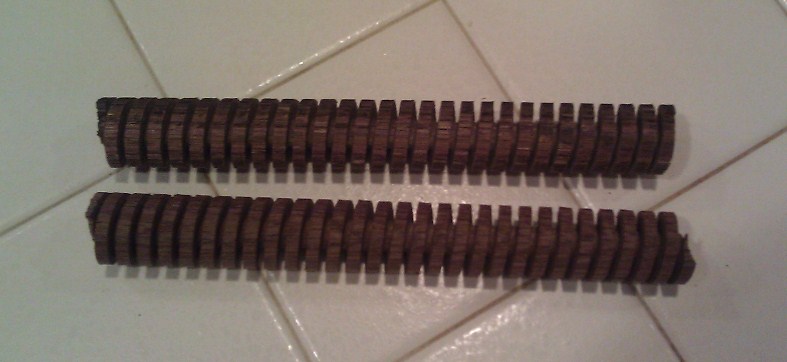
I bought these oak spirals for my New England Hard Cider to impart a barrel aged taste to it.

Oak Spirals

I have used oak chips before and they were a little tough to get out of the carboy after the final racking.  These spirals looked interesting to me.  They are shaped for the opening of a carboy, they should be easy to remove and have a larger surface area than the chips.

I bought medium toast American oak spirals.  The package says that flavor extraction would be complete in 6 weeks.

BYO magazine, in a few articles, has stated that the spirals need 20 weeks of contact time to impart their flavor in beer.  I am not sure if it takes that long for hard cider.

My plan was to rack the cider into a clean, sanitized carboy onto a spiral and a half.  In three weeks, I would check the flavor.  If it wasn’t to my liking, I was going to go another three weeks and so on.

Does anybody have any experience using oak spirals?  Should I have used oak cubes instead?

Doppelbock Brew Day

Brewed up a Doppelbock on Sunday with mixed success.  Following my own recipe, I had a 17 pound grain bill.  Most of my batches have bills in the 11 to 12 pound range.

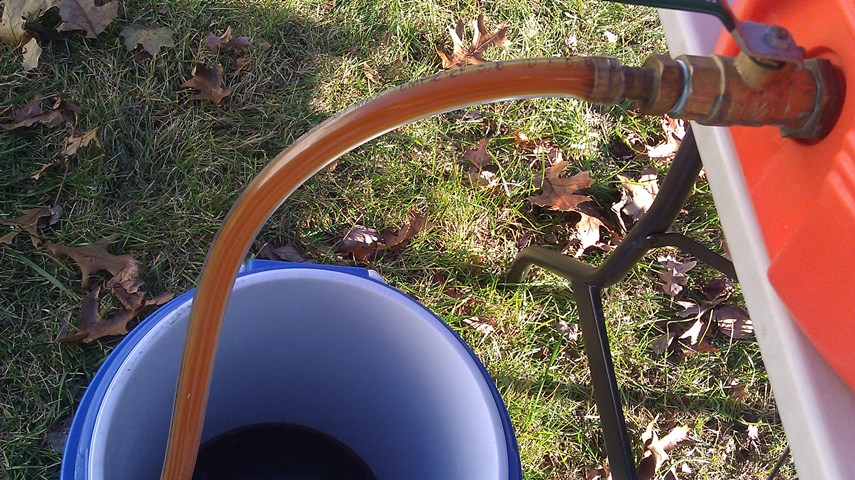
I had enough room in my tun to handle the grain and the water need to mash.  The first runnings were a sight to see.

Doppelbock First Runnings

The wort had a beautiful caramel color. I am glad I took a picture.

The boil was fine but followed some advice to keep it not so vigorous.

I am afraid that advice made me miss my final gravity target by 11 points (1.072 vs. 1.083).

The FG is in range of the style but barely.  1.072 is the lower limit of the style.

If I make a big beer again, I need to learn how to hit my gravity target.


Other Fermentables

Over the past few weeks, I have acquired some other fermentables. If you’ve never seen 24 pounds of honey in a bucket, you’ll want to check out this post.

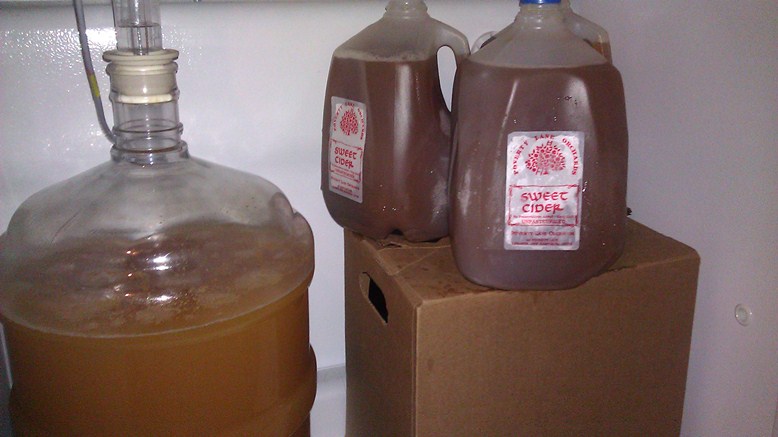
So yesterday, my brother dropped by Poverty Lane Orchards on his way back from a business meeting in Burlington, VT and bought some pressed apple juice (the label says sweet cider, but we know better). When I got home from work, I had three, mostly frozen solid, gallon jugs of this stuff on my front porch.

I put them in the beer fridge with the fermenting New England hard cider. They are slowing thawing out and keeping the temp in the fridge steady. I don’t think I have heard the compressor kick on since I put the jugs in there.
Poverty Lane Orchards Sweet Cider

This juice is unexpected – I asked my brother to pick up some of their Farnum Hill cider, not the sweet, unfermented stuff.

That’s not to say these 3 gallons are unwanted. I will put them to good use. I think I will make a simple scrumpy – just juice and yeast.

The only decision I have to make is what yeast strain to use. Do I use a champagne strain or an English cider strain? I have used a champagne strain before and that’s what all the expert say to use.

I may use a liquid version this time around rather than a dry one.

I have Campden tablets and I plan to add them at the end of fermentation. Then, I will add a little sugar to sweeten it just enough, bottle it, and let it age a couple of months (if I can wait that long). It will be a nice still cider.

In the beginning of November, I bought some honey in bulk – a raw local wildflower honey and a Maine blueberry honey.

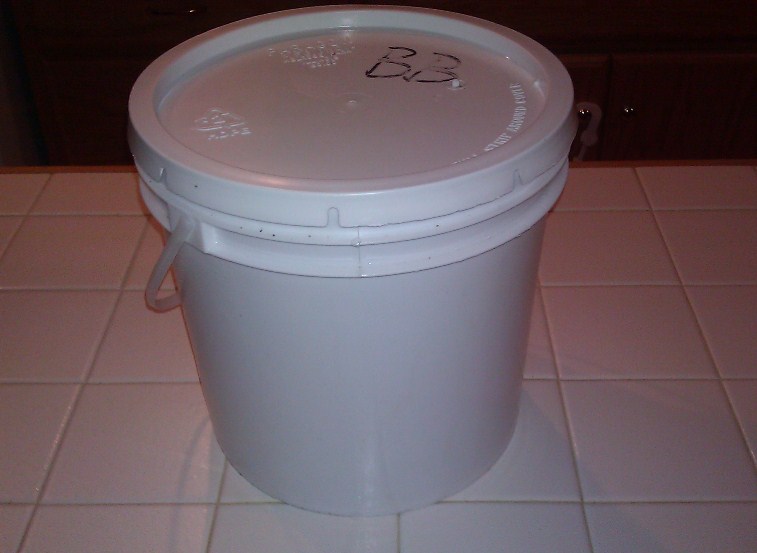
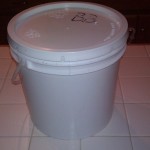
The honey is packed in white plastic buckets like this one:
Honey in Bulk

It’s marked BB for blueberry. Sweet.

I don’t know how hard it is going to be to work with this much honey, but learning will be half the fun, right?

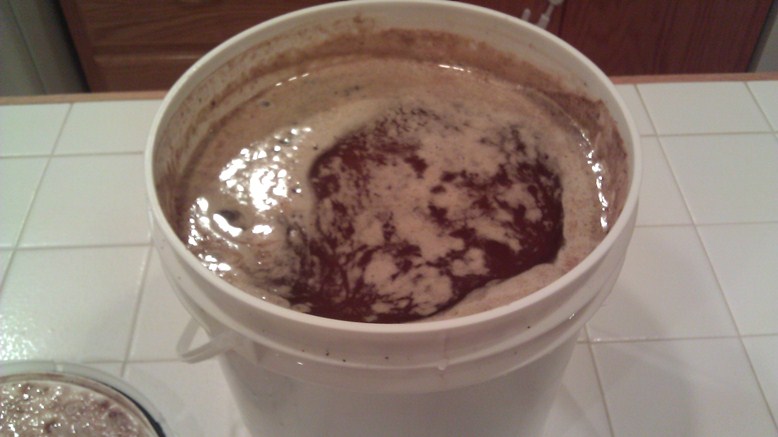
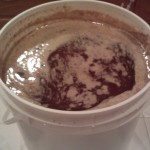
The honey in the small jar I bought from Merrimack Valley Apiaries was all crystallized. I had gently and slowly heat it up to get it back into a liquid form. I was afraid that the buckets would be in the same shape. I opened this one just to see what condition it was in.

It looked pretty good:
Blueberry honey in bulk

This honey is also raw and unfiltered so that is why it’s a little foamy on the top, but it appeared to be not crystallized which is what I was hoping to find.

I am not sure when I will get around to making some more mead, but I think I have the right raw materials to do it.
Hard Cider and Cyser Update

Here is a quick update on the progress of the hard cider and the cyser that I started last week.

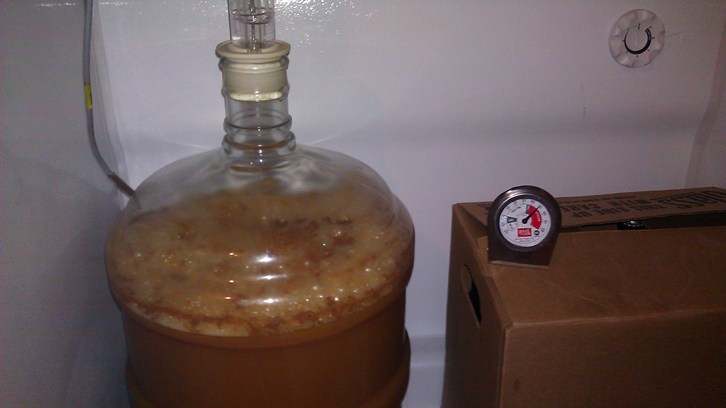
The hard cider has been fermenting in the ol’ beer fridge at around 52°F. Now, this is cold for the Nottingham yeast strain but it’s been chugging along slowly. After a week, the gravity has come down from 1.072 to 1.040. The sample I took for my hydrometer reading tasted ok – no weird flavors to report.

I am going to keep it in the fridge for a while. The plan is to let it sit in the primary vessel for a month but I will check the gravity next week to see if it is has reached full fermentation or what. There is an addition of a half pound of raisins, which now I think will be a part of a racking to a secondary vessel exercise, and an aging period with oak after racking a third time.

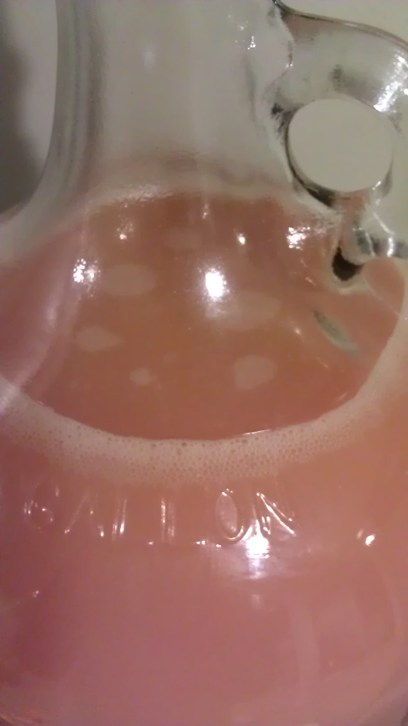
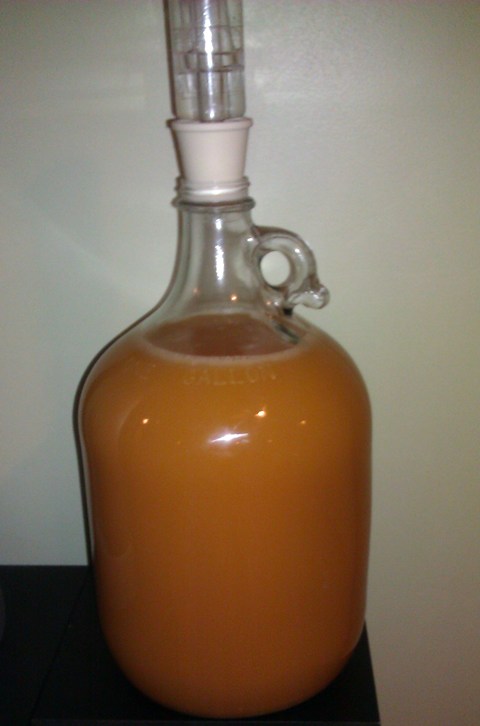
The cyser is fermenting well. The champagne yeast doesn’t foam at all so I probably could have filled the gallon jug even higher. I didn’t take a reading and I have no plans to rack or do anything with that mead in the near future. It seems to be happy bubbling away. I tried to get a good shot of the tiny bubbles in the third photo above. I took it without the flash which made the color of the cyser look different. Believe me, it’s not multi-colored.

Sweet Potato Beer

This recipe is for a Sweet Potato Beer, amber in style.  I have mentioned this brew a few times since 2009!

Sweet Potato Amber Beer Recipe

Batch size: 6.5 gallons
OG: 1.048 (grain based, no assumptions made for sweet potatoes, but true OG should be a bit higher)
IBUs:  30
SRM: 13.3 (again, color may get more orange from potatoes)

8.0 lb US Pale Malt
3.0 lb German Pilsner Malt
0.75 lb Special B Malt (180L)
0.5 oz Magnum (14%AA) 60min
1.0 oz Willamette (5.5%AA) 15min
4 medium sized sweet potatoes (roasted in foil, 3hrs @ 350F).
1 pkg Fermentis S-04 English Ale Yeast

The potatoes are roasted in foil until well caramelized.  The plan is to stir the flesh into a gallon of the strike water first to create a “soup” or slurry of potato.  Then stir it into the main mash.  Holding the mash for 90 minutes to ensure conversion of the potato starches as well as the grain.  Run off and brew as normal.
Ferment at 65-68F for the first 4 days then ramp up to 72F to finish.

Page 180 of 322

Powered by WordPress & Theme by Anders Norén